Chassis Dynamometer & Power Testing Equipment
2WD/4WD Chassis Dynamometer | CTDCG -3J/CTDCG-3-4WD
The CTDCG-3J and CTDCG-3-4WD test chassis performance on two-wheel-drive and four-wheel-drive vehicles. Roller loading produces wheel-output power and torque curves. The system supports manual or automatic loading, saved results and curve comparison, with optional constant-speed, acceleration and coast-down tests.
Product Overview
The CTDCG-3J and CTDCG-3-4WD are chassis dynamometers for vehicle performance testing. The drive wheels turn the rollers while the measurement and control system records how power and torque change with engine or vehicle speed. The results support powertrain development, tuning and vehicle performance checks.
The CTDCG-3J is designed for two-wheel-drive vehicles. The CTDCG-3-4WD supports both two-wheel-drive and four-wheel-drive vehicles. Both models use air-cooled eddy-current absorbers, with computer-controlled resistance to establish the required test conditions.
Test Functions and Features
Power and Torque Curves
Power and torque curves show vehicle performance across the tested engine-speed range. Operators can review peak values and changes throughout the test to assess vehicle condition and tuning results.
Configurable Test Modes
Loading can be controlled manually or automatically. Optional tests include constant speed, constant tractive force, acceleration from rest, overtaking acceleration, coast-down, hill-climbing, speedometer checks and odometer checks. Test functions can be selected to suit the intended work.
Saved Reports and Curve Comparison
The software stores and retrieves test results, curves and vehicle information. Curves from multiple tests can be compared to review changes before and after vehicle adjustments. Reports can be customised, and test data can be exported in Word or Excel format for saving, editing and printing.
Additional Consumption and Emissions Measurements
A fuel-consumption meter, exhaust-gas analyser or air–fuel ratio instrument can be added for the corresponding tests. Electrical-energy consumption testing also requires appropriate measurement equipment. These instruments complement the dynamometer's performance measurements.
Technical Specifications
| Parameter | CTDCG-3J | CTDCG-3-4WD |
|---|---|---|
| Drive configuration | Two-wheel drive | Two-wheel drive and four-wheel drive |
| Maximum test vehicle mass | 3,500 kg | 3,500 kg |
| Rated load capacity | 10,000 kg | 10,000 kg |
| Test power capacity | 1,000 hp | 2,000 hp |
| Rated absorption torque | 3,200 N·m | 3,200 × 2 N·m |
| Roller diameter × length | Ø216 × 850 mm | Ø216 × 850 mm |
| Roller inside/outside spacing | 700 / 2,400 mm | 700 / 2,400 mm |
| Roller centre distance | 437 mm | 437 mm |
| Equipment weight | 1,800 kg | 3,800 kg |
The CTDCG-3-4WD accommodates wheelbases of 2,100–3,200 mm, with a wheelbase adjustment range of 0–1,100 mm. Select test vehicles according to the maximum test vehicle mass of 3,500 kg. The 10,000 kg rated load capacity is a separate equipment specification, not the maximum vehicle mass permitted for testing.
The following specifications apply to both models:
| Item | Specification |
|---|---|
| Speed indication error | Within ±1% |
| Torque indication error | Within ±2% |
| Power indication error | Within ±2% |
| Power absorber | Air-cooled eddy-current absorber |
| Air-supply pressure | ≥0.8 MPa |
| Main-unit power supply | AC 220 V, 50 Hz |
| Fan power supply | AC 380 V, 50 Hz |
| Operating ambient temperature | 0–40 ℃ |
Applications and Configuration
The dynamometers are suitable for vehicle performance development, modification and ECU tuning, as well as post-repair performance checks and used-vehicle assessment. Vehicle drive configuration, total mass, wheelbase and required tests determine the bench and loading configuration.
Site planning should allow for vehicle access, restraint points, cooling fans and exhaust extraction. The main unit and fan use different power supplies, so each supply and the required compressed-air connection should be planned separately.
Frequently Asked Questions
Can the Four-Wheel-Drive Model Also Test Two-Wheel-Drive Vehicles?
Yes. The CTDCG-3-4WD supports both drive configurations. The test setup must suit the vehicle's drive system, and four-wheel-drive vehicles must also fit the dynamometer's wheelbase range.
Does It Measure Wheel Power or Engine Shaft Power?
The dynamometer tests chassis performance through the drive wheels and rollers, producing wheel-output measurements. Direct engine-shaft measurement is a different test method, and the two values should not be treated as identical.
Are Fuel-Consumption and Exhaust-Gas Instruments Built In?
These instruments are optional accessories. Fuel-consumption, exhaust-gas and air–fuel ratio measurements require the corresponding instruments.
Can I Compare Results Before and After Tuning?
Yes. The software saves results and curves and can retrieve multiple test records for curve comparison, helping operators review changes in vehicle performance.
Contact Us
To discuss a two-wheel-drive or four-wheel-drive chassis dynamometer, please provide Cartesy with the vehicle types, drive configurations, total masses, wheelbases, test requirements and site layout. These details will help define the model and supporting equipment.
Related Pages
Related Products
Compare related inspection systems
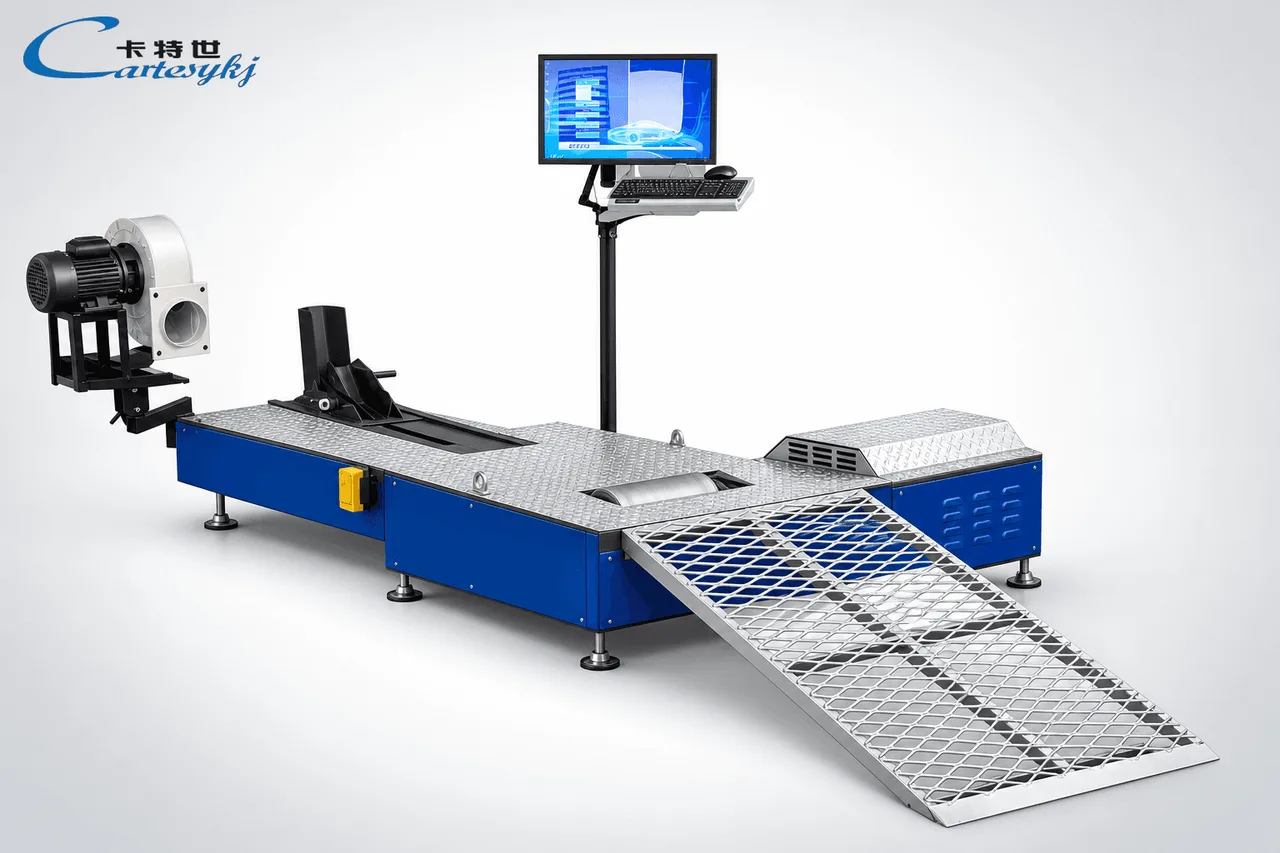
Chassis Dynamometer & Power Testing Equipment
Motorcycle single-roller/double-roller horsepower dynamometer | CTMTDCG-3W/CTMTDCG-10W
View Product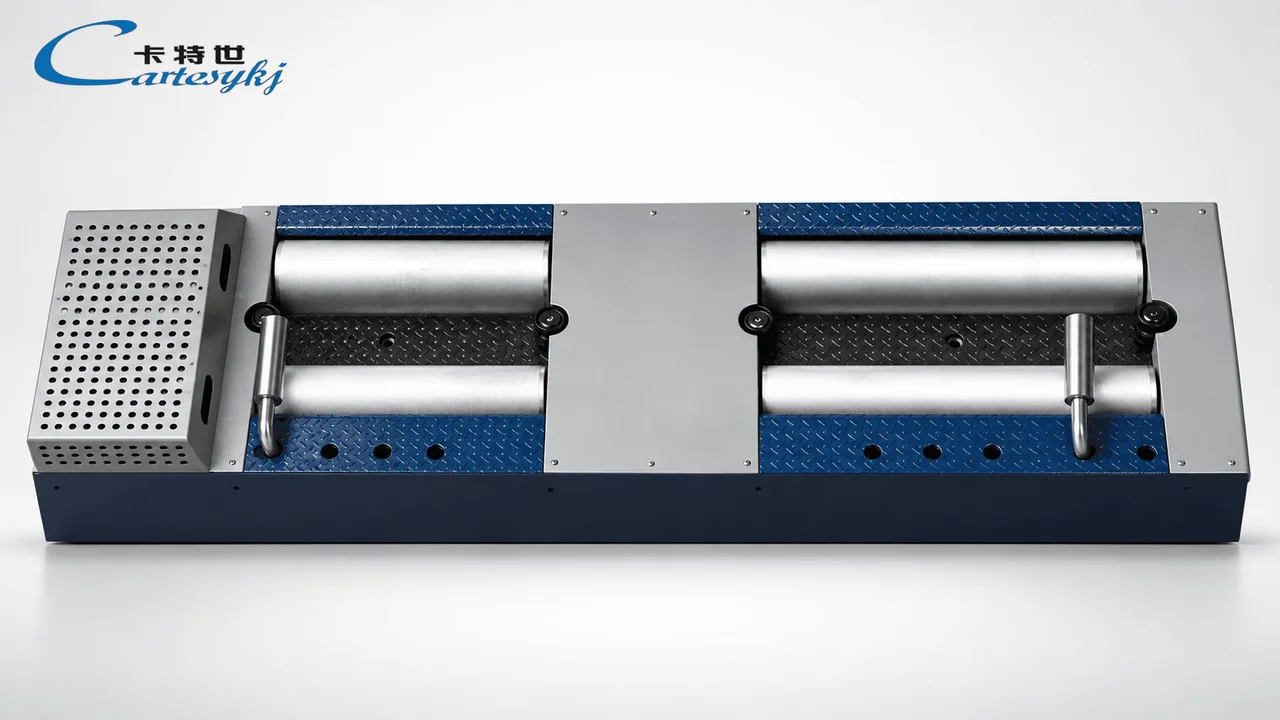
Chassis Dynamometer & Power Testing Equipment
Vehicle chassis dynamometer | CTDCG-3/CTDCG-10/CTDCG-13/CTDCG-15
View ProductRequest a Quote
Request configuration and pricing for your project.
Share your vehicle type, inspection lane layout, target capacity, and required model configuration for 2WD/4WD Chassis Dynamometer | CTDCG -3J/CTDCG-3-4WD.
Share the project location, vehicle types, inspection scope, applicable standards, target throughput, site conditions and current stage. We will confirm the configuration scope before discussing pricing.