
Speedometer & Roller Testing Equipment
Vehicle Speedometer Tester | CTCS-3A/CTCS-10A/CTCS-10A
The CTCS-3A/CTCS-10A vehicle speedometer tester provides non-contact speed measurement over 0–130 km/h, wireless test-point control and synchronized air-bag lifting. The lift automatically locks above a roller speed of 5 km/h. Maximum axle loads are 3000 kg and 10000 kg respectively.
Product Overview
The CTCS vehicle speedometer tester checks speedometer indication error. Testing takes place on a roller station, where a non-contact sensor obtains speed data for comparison with the vehicle's instrument display.
Both the CTCS-3A and CTCS-10A have a speed measurement range of 0–130 km/h. Their maximum permissible axle loads are 3000 kg and 10000 kg respectively. The models differ in roller length, track layout, air-supply requirements and overall dimensions, providing configurations for speedometer stations within vehicle safety inspection facilities.
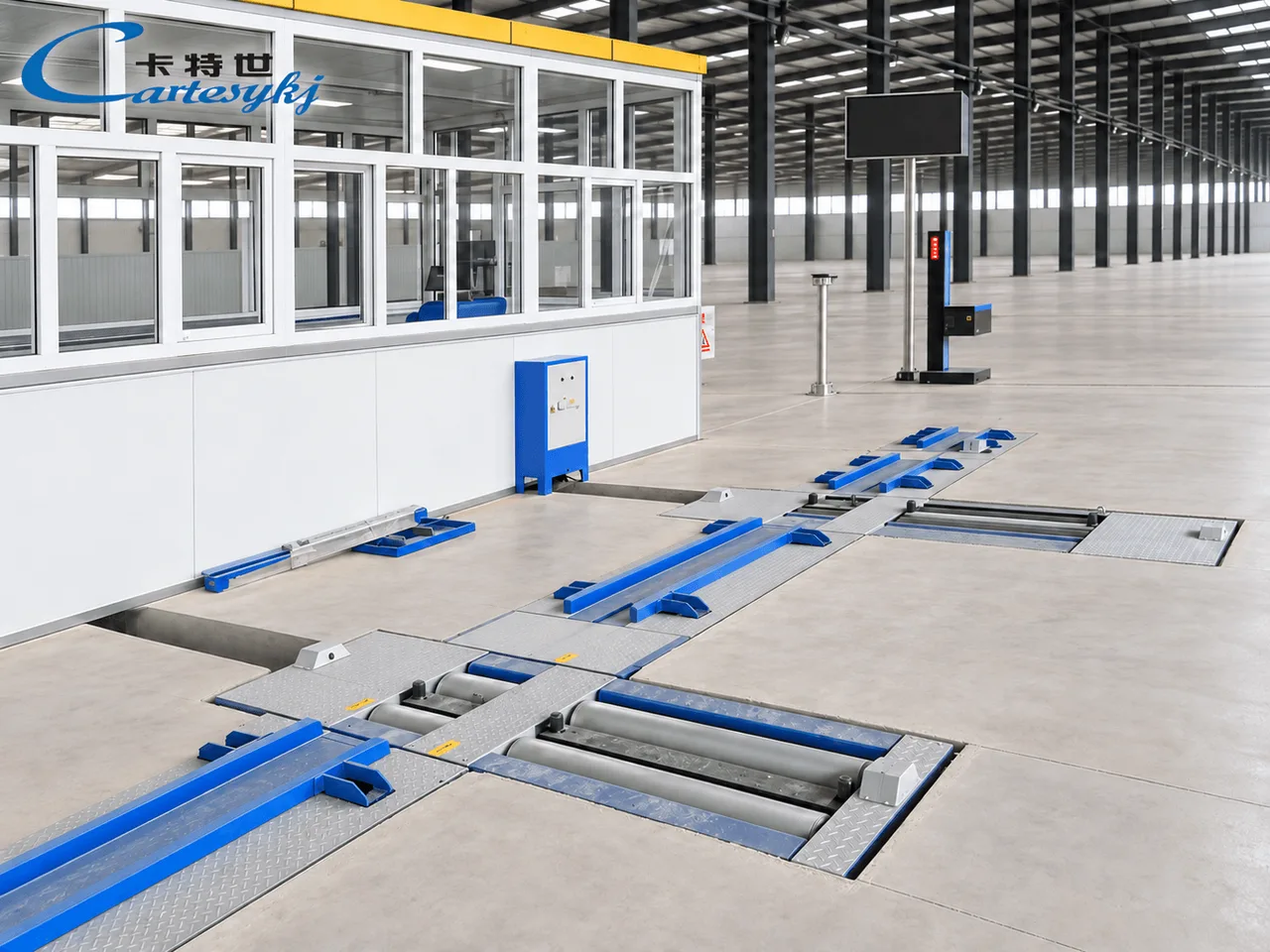
The photo shows the CTCS speedometer tester. Differences between the CTCS-3A and CTCS-10A are listed in the technical specifications.
Key Features
Non-Contact Speed Measurement and Wireless Test-Point Control
A non-contact sensor measures speed, and a wireless remote controls the test-point speed. Operators can arrange test points for the inspection task and record the tester's measured speed alongside the vehicle's speedometer reading to check indication at different points.
Specially Knurled Rollers
A special knurled roller surface improves tyre contact friction and wear resistance. The CTCS-3A uses Ø190 × 850 mm rollers, while the CTCS-10A uses Ø190 × 1100 mm rollers. Both have the same diameter, with the length matched to the corresponding platform configuration.
Synchronized Air-Bag Lifting
An air-bag lifting mechanism assists vehicle entry and exit with synchronized lifting action. As the wheels enter or leave the roller area, the lift works with the platform to handle vehicle access within the testing station.
Lift Interlock and Wheel Protection
The control system automatically locks the lifting mechanism when roller speed exceeds 5 km/h, preventing unintended lifting during testing. The platform also has wheel guards to prevent the wheels from scraping against the body during high-speed rotation.
The body uses an integrated welded structure and does not require anchor bolts for installation, making equipment placement and commissioning convenient.
Technical Specifications
| Parameter | CTCS-3A | CTCS-10A |
|---|---|---|
| Maximum permissible axle load | 3000 kg | 10000 kg |
| Speed measurement range | 0–130 km/h | 0–130 km/h |
| Inner/outer track width | 700 / 2400 mm | 700 / 2700 mm |
| Roller diameter × length | Ø190 × 850 mm | Ø190 × 1100 mm |
| Air-supply pressure | 0.5–0.6 MPa | 0.7–0.8 MPa |
| Overall dimensions (L × W × H) | 2700 × 750 × 400 mm | 3200 × 900 × 480 mm |
Maximum permissible axle load is the axle load supported by the tester. The inner and outer track widths describe the testing layout and should be matched to the vehicle's track when choosing the model.
Station Applications
The tester can be installed at the speedometer station of a vehicle safety inspection line to compare the vehicle's instrument reading with measured speed. Wireless test-point control, air-bag lifting and platform protection support test-point operation, vehicle access and the testing process respectively, helping integrate speedometer checks into the station workflow.
Use the selected model's overall dimensions to plan its position, with space for vehicle entry, exit and the operator. The two models require different air-supply pressures, so the compressed-air arrangement should match the selected tester.
Frequently Asked Questions
What Are the Main Differences Between the CTCS-3A and CTCS-10A?
The main differences are load capacity and platform layout. Maximum permissible axle loads are 3000 kg and 10000 kg respectively, and roller lengths are 850 mm and 1100 mm. Outer track width, air pressure and overall dimensions also differ.
Can the Vehicle Be Lifted at Any Time During Testing?
The lifting mechanism automatically locks when roller speed exceeds 5 km/h. After testing, use the lift for vehicle entry and exit according to the equipment's operating instructions.
Do Both Models Require the Same Air Pressure?
No. The CTCS-3A requires 0.5–0.6 MPa, while the CTCS-10A requires 0.7–0.8 MPa. The air supply serves the air-bag lifting mechanism.
Does 0–130 km/h Describe a Vehicle Maximum-Speed Testing Capability?
It is the tester's speed measurement range for checking speedometer indication. It does not establish vehicle maximum-speed or powertrain performance testing capability.
Contact Us
Provide Cartesy with the vehicle axle loads, track widths and available testing space. We can help select a CTCS speedometer tester and arrange the station layout.
Related Pages
Related Products
Compare related inspection systems
Speedometer & Roller Testing Equipment
Motorcycle (EV) Speedometer Tester for Two & Three Wheels | CTMT-750 /CT3JZMT-750
View Product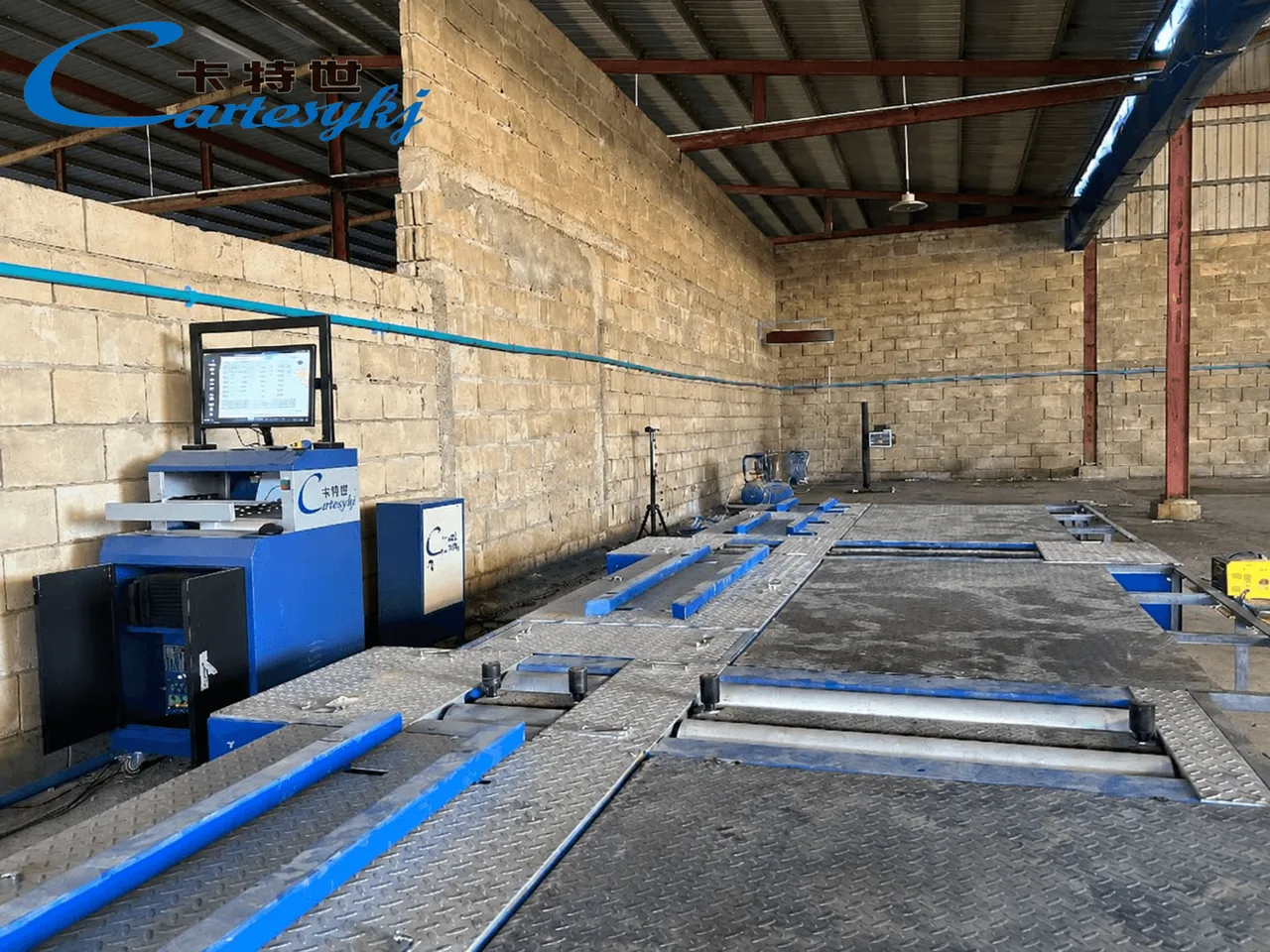
Speedometer & Roller Testing Equipment
Two-Wheel Motorcycle(EV) Speedometer Tester | CTJZMT-300B
View ProductRequest a Quote
Request configuration and pricing for your project.
Share your vehicle type, inspection lane layout, target capacity, and required model configuration for Vehicle Speedometer Tester | CTCS-3A/CTCS-10A/CTCS-10A.
Share the project location, vehicle types, inspection scope, applicable standards, target throughput, site conditions and current stage. We will confirm the configuration scope before discussing pricing.