
Motorcycle Inspection Equipment
Motorcycle (EV) Tester for Two & Three Wheels | CTMT-750/CT3JZMT-750
Integrated motorcycle inspection equipment for two-wheel, three-wheel, and electric motorcycle testing, covering brake force, axle load, speedometer, and optional wheel alignment checks.
- Brake force, axle load, and speedometer testing in one platform
- Supports two-wheel, three-wheel, offset three-wheel, and electric motorcycles
- 1000 kg maximum permissible axle load with 0-750 kg weighing range

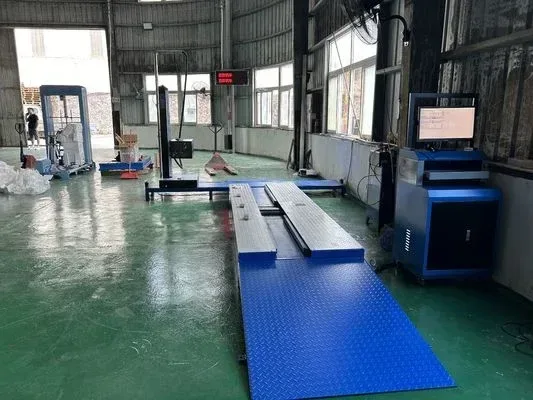
Operating high-throughput vehicle compliance testing facilities requires robust, precise motorcycle inspection equipment to eliminate operational bottlenecks and maintain statutory roadway safety. Measurement inaccuracies in braking force, axle load ratings, or speed tracking can compromise regulatory compliance and vehicle roadworthiness. Choosing the right testing machinery requires an evaluation of chassis capacities, pneumatic clamping capabilities, sensor precision, and structural design across diverse motorcycle categories.
As an established motorcycle testing equipment manufacturer, Cartesykj develops integrated vehicle inspection solutions that combine brake force testing, axle load measurement, speedometer testing, and optional wheel alignment testing. This technical guide outlines documented engineering data for the CTMT-750 and CT3JZMT-750 motorcycle inspection equipment platforms, giving testing station engineers and procurement directors the technical details required for facility planning.
Table of Contents
- Verified Equipment Definition and Application Scope
- Buyer Value and Sourcing Considerations
- Operating Principles and Technology Configurations
- Documented Materials, Quality Controls, and Standards
- Practical Sourcing and Risk-Mitigation Guidance
- Frequently Asked Questions
- Conclusion
1. Verified Equipment Definition and Application Scope
Industrial motorcycle inspection equipment consists of an integrated multi-station test bench engineered to measure dynamic performance, physical axle loads, and mechanical tracking on light vehicles. Cartesykj manufactures this equipment under two core model series: the CTMT-750 and the CT3JZMT-750. Both systems house dynamic testing sensors within a rigid structural frame.
Modern test stations handle diverse vehicle architectures. Cartesykj motorcycle inspection equipment provides verified testing capability across multiple motorcycle categories without requiring separate test platforms:
- Two-wheel motorcycles (standard commuter, touring, and sport models)
- Three-wheel motorcycles (conventional sidecar and commercial layouts)
- Offset three-wheel motorcycles
- Electric motorcycle inspection equipment variants across light and heavy chassis sizes
By housing multiple dynamic sensors on an integrated platform, these systems perform statutory safety evaluations without requiring vehicles to be repositioned manually between separate standalone test devices.
Core Structural and Dimensional Specifications
Both the CTMT-750 and CT3JZMT-750 motorcycle inspection equipment platforms are built to documented structural capacities, accommodating various wheelbases and vehicle weights:
- Maximum Permissible Axle Load: 1000 kg
- Applicable Wheelbase Range: 900 mm to 1700 mm
- Applicable Wheel Distance: 500 mm inner width / 1500 mm outer width (for three-wheel motorcycle inspection equipment layouts)
- Pneumatic Motorcycle Clamping System Range: 50 mm to 230 mm
- Pneumatic Supply Pressure: 0.6 MPa to 0.8 MPa
The pneumatic motorcycle clamping system utilizes automated pneumatic centering to hold tires firmly between 50 mm and 230 mm in width, preventing vehicle slippage during dynamic engagement of the rollers.
2. Buyer Value and Sourcing Considerations Supported by Facts
When selecting motorcycle inspection equipment, procurement directors and station operators must align machine performance with regional regulatory requirements and vehicle fleets. Sourcing decisions balance structural load tolerance against testing throughput and module versatility.
A critical consideration is distinguishing between standard integrated modules and optional testing features. While both the CTMT-750 two wheel motorcycle test bench and the CT3JZMT-750 three wheel motorcycle testing equipment share baseline braking, loading, and speed evaluation hardware, wheel deviation testing functions differ by configuration.
Technical Specification
| Technical Specification | CTMT-750 Platform | CT3JZMT-750 Platform |
|---|---|---|
| Equipment Classification | Two wheel motorcycle inspection equipment | Three wheel motorcycle inspection equipment |
| Supported Chassis Types | Two-wheel motorcycles & electric motorcycles | Conventional & offset three-wheel motorcycles |
| Maximum Permissible Axle Load | 1000 kg | 1000 kg |
| Axle Load Measurement Range | 0-750 kg | 0-750 kg |
| Axle Load Sensor Accuracy | +/-2% FS (Repeatability: +/-2%) | +/-2% FS (Repeatability: +/-2%) |
| Brake Force Measurement Range | 0-2500 N (Indication error: +/-3%) | 0-2500 N (Indication error: +/-3%) |
| Brake Roller Drive Power | 1.5 kW x 2 | 1.5 kW x 2 |
| Speedometer Measurement Range | 0-120 km/h (Indication error: +/-2%) | 0-120 km/h (Indication error: +/-2%) |
| Speedometer Motor & Lift | 2.2 kW; Pneumatic lifting system | 2.2 kW; Pneumatic lifting system |
| Roller Center Spacing | 310 mm | 310 mm |
| Roller Adhesion Coefficient | >0.85 (Dry surface) / 0.6 (Wet surface) | >0.85 (Dry surface) / 0.6 (Wet surface) |
| Wheel Alignment Testing Module | Optional: +/-15 mm (Indication error: +/-0.2 mm) | Not documented in source specifications |
| Pneumatic Clamping Mechanism | 50-230 mm centering (0.6-0.8 MPa) | 50-230 mm centering (0.6-0.8 MPa) |
Buyers evaluating motorcycle inspection equipment must note that the maximum permissible axle load of 1000 kg indicates the total structural load capacity of the frame. In contrast, the integrated motorcycle wheel weight tester measures axle loads within an active sensor calibration range of 0 to 750 kg.
Multi-Station Inspection Efficiency
Traditional inspection centers often suffer throughput bottlenecks when moving vehicles sequentially between standalone devices. Cartesykj motorcycle inspection equipment supports multi station motorcycle testing workflows, allowing continuous inspection procedures across dynamic testing benches to increase station throughput.
3. Verified Technology Trends and Classifications
Modern motorcycle inspection equipment integrates mechanical, electronic, and pneumatic modules to achieve repeatable measurements across high testing volumes. The multi station motorcycle testing workflow coordinates vehicle movement across designated dynamic stages.
Pneumatic Motorcycle Positioning and Clamping
Upon driving onto the motorcycle test bench, the vehicle wheel enters the pneumatic clamping mechanism. Driven by a dedicated compressed air supply between 0.6 and 0.8 MPa, dual pneumatic centering plates clamp the tire within a 50 mm to 230 mm range, securing the wheel parallel to the roller assembly.
Motorcycle Axle Load and Wheel Weight Measurement
The motorcycle axle load tester records the static load on each wheel assembly. Using a high-precision load platform engineered for rapid calibration, the sensor records dynamic loads up to 750 kg with a system indication error within +/-2% full scale (FS) and repeatability error within +/-2%.
Motorcycle Brake Force Testing
The motorcycle brake force tester evaluates stopping efficiency using two drive rollers spaced at 310 mm center distance. Powered by two 1.5 kW electric motors, this motorcycle brake tester measures retarding torque across a range of 0 to 2500 N with an indication error of +/-3%.
Roller adhesion surfaces are treated to maintain a high coefficient of friction—exceeding 0.85 under dry conditions and 0.6 under wet conditions. This surface helps prevent tire slippage during sudden brake applications.
Motorcycle Speedometer Testing
The motorcycle speedometer tester evaluates speed reading accuracy on driven wheels. The roller assembly features a 310 mm center distance, driven by a 2.2 kW motor utilizing variable-frequency speed control. Testing reaches speeds up to 120 km/h with an indication error within +/-2%.
Once testing finishes, an integrated pneumatic lifting mechanism raises the wheel out of the roller pocket, allowing the operator to exit the test station smoothly without unnecessary tire wear.
Optional Motorcycle Wheel Alignment and Deviation Testing
For two-wheel applications, the CTMT-750 motorcycle inspection equipment can be configured with an optional motorcycle wheel alignment tester. This motorcycle wheel deviation tester tracks lateral deviation between the front and rear wheel centerlines across a +/-15 mm range with an indication error of +/-0.2 mm.
4. Documented Materials, Quality Controls, and Standards
Structural reliability in motorcycle inspection equipment depends heavily on manufacturing quality and raw material processing. Cartesykj builds its test benches using an integrated bent-plate welded steel structure. This design provides rigid torsional resistance under dynamic braking loads without requiring anchor bolts during foundation setup.
Equipment rollers undergo dynamic balancing technology and specialized surface treatment to resist abrasive wear from aggressive motorcycle tire treads. In addition, variable-frequency drives prevent mechanical shock during sudden drive starts and stops.
Operational safety is supported by a double safety mechanism engineered to prevent accidental or unintended pneumatic lifting operations while a motorcycle is running on the rollers.
Referenced Technical Standards
Cartesykj manufactures this motorcycle inspection equipment in accordance with verified Chinese technical standards:
- GB/T 13563: Roller-type motorcycle brake inspection bench technical requirements and test methods.
- GB 7258: Operating safety performance requirements for power-driven vehicles.
Buyers operating under international jurisdictions must verify local statutory requirements against these documented performance envelopes before final implementation.
5. Practical Sourcing and Risk-Mitigation Guidance
Procuring motorcycle inspection station equipment requires evaluating facility layout, workflow speeds, and vehicle mix. High-volume testing centers must balance cycle times with module expansion capabilities.
Station Layout and Foundation Requirements
Because the test bench utilizes an integrated bent-plate welded frame that eliminates the need for embedded ground anchor bolts, installation procedures are simplified. However, operators must provide a steady compressed air line supplying 0.6 to 0.8 MPa to ensure correct operation of the pneumatic lifting and clamping cylinders.
Integration into an Automated Motorcycle Safety Inspection Line
To establish a complete motorcycle safety inspection line, inspection centers can integrate complementary diagnostic instruments with the core Cartesykj motorcycle inspection equipment bench:
- Motorcycle Headlight Testers for optical beam alignment and luminous intensity checks
- Motorcycle Emission Testers for exhaust gas compliance
- Sound Level Meters for acoustic emissions and decibel limits
- LED Signal Boards for clear driver positioning guidance
Integrating these testing modules with the core motorcycle inspection system creates a streamlined motorcycle safety inspection line that satisfies regional road safety programs.
6. Frequently Asked Questions
What is motorcycle inspection equipment?
Motorcycle inspection equipment consists of automated, mechanical test benches used to evaluate vehicle roadworthiness. It typically integrates brake force testing, axle weight measurement, speedometer verification, and wheel tracking within a single automated workstation.
Can this motorcycle inspection equipment test both two-wheel and three-wheel models?
Yes. Cartesykj manufactures the CTMT-750 for two-wheel motorcycles and the CT3JZMT-750 for conventional and offset three-wheel motorcycles. Both lines support electric motorcycle inspection equipment applications within specified dimensional ranges.
What is the difference between maximum permissible axle load and measurement range?
The maximum permissible axle load for this motorcycle inspection equipment is 1000 kg, which represents the maximum mechanical load the structure can bear. The axle load measurement range is 0 to 750 kg, which defines the calibrated measuring envelope of the weight sensors.
Is wheel alignment testing standard on all motorcycle inspection equipment models?
No. Wheel alignment measurement (+/-15 mm range, +/-0.2 mm error) is an optional module verified for the CTMT-750 model. Wheel alignment specifications are not documented for the CT3JZMT-750 model.
What pneumatic pressure is required to operate the clamping mechanism?
The pneumatic clamping and lifting mechanisms on Cartesykj motorcycle inspection equipment require a pneumatic supply pressure between 0.6 MPa and 0.8 MPa.
7. Conclusion
Investing in verified motorcycle inspection equipment provides testing stations, government transit authorities, and motorcycle service centers with the precision needed for rigorous roadworthiness certification. The Cartesykj CTMT-750 and CT3JZMT-750 platforms deliver reliable axle weight, dynamic braking, and speedometer measurement in a space-saving footprint. Contact Cartesykj today to request technical drawings, discuss optional modules, or consult with an engineering specialist regarding your motorcycle inspection equipment requirements.
Frequently Asked Questions
Technical questions to resolve before planning
01What is motorcycle inspection equipment?
Motorcycle inspection equipment consists of automated mechanical test benches used to evaluate vehicle roadworthiness, typically integrating brake force testing, axle weight measurement, speedometer verification, and wheel tracking within a single workstation.
02Can this equipment test both two-wheel and three-wheel models?
Yes. Cartesy manufactures the CTMT-750 for two-wheel motorcycles and the CT3JZMT-750 for conventional and offset three-wheel motorcycles. Both platforms support electric motorcycle inspection applications within the specified dimensional range.
03What pneumatic pressure is required?
The pneumatic clamping and lifting mechanisms require a compressed air supply between 0.6 MPa and 0.8 MPa.
Related Products
Compare related inspection systems
Request a Quote
Request configuration and pricing for your project.
Share your motorcycle categories, wheelbase range, required test modules, and station layout so Cartesy can configure the CTMT-750 or CT3JZMT-750 platform.
Share the project location, vehicle types, inspection scope, applicable standards, target throughput, site conditions and current stage. We will confirm the configuration scope before discussing pricing.