
Inspection Line Control & Data Management Systems
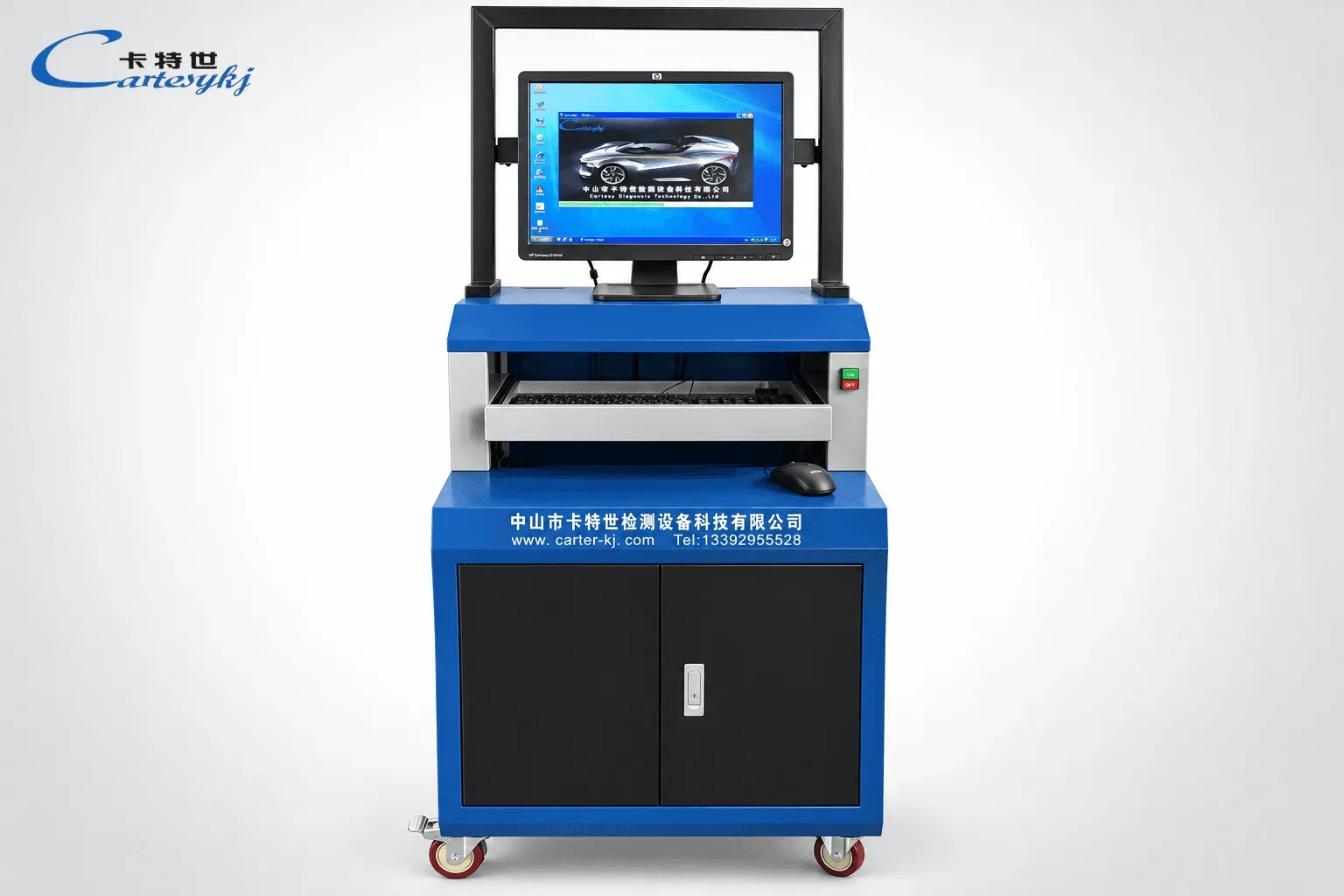
LCD control instrument with touch screen | Cartesykj
Operating a high-throughput diagnostic facility requires real-time coordination between dynamic roller beds, force transducers, and visual driver prompts. A modern LCD control instrument serves as the central operationa...

Operating a high-throughput diagnostic facility requires real-time coordination between dynamic roller beds, force transducers, and visual driver prompts. A modern LCD control instrument serves as the central operational backbone, coordinating test sequences across mechanical benches while eliminating manual transcription errors. Without dedicated signal processing, automatic motor actuation, and integrated data capture, test lanes face severe operational bottlenecks and inspection variances. This engineering overview analyzes the functional architecture, operational workflow, component design, and integration requirements of contemporary inspection line control platforms.
Technical Table of Contents:
- Verified Equipment Definition and Material/Application Scope
- Buyer Value and Sourcing Considerations Supported by Supplied Facts
- Verified Technology Trends and Classifications
- Documented Materials, Quality Controls, Certifications and Components
- Practical Sourcing and Risk-Mitigation Guidance
- Frequently Asked Questions
- System Conclusion and Technical Evaluation
Verified Equipment Definition and Material/Application Scope of a Vehicle Inspection Line Control System
An industrial LCD control instrument is an integrated computational and electrical interface engineered to automate, acquire, and evaluate mechanical vehicle performance metrics. Operating within statutory testing centers, commercial fleet maintenance facilities, and vehicle inspection stations, this specialized equipment converts raw electrical telemetry from dynamic test benches into standardized physical units and generates legally verifiable pass/fail reports.
By unifying physical measurement hardware with a central processor, the LCD control instrument ensures repeatable testing sequences across diverse vehicle categories. The platform handles both light and heavy vehicles through modular sensor calibration and automated roller drive engagement.
Integrated Testing Benches and Measurement Capabilities
The primary control architecture interfaces directly with standardized station hardware to conduct multi-point functional inspections:
- Vehicle brake tester control: Automatically activates motor drives once the intelligent control software detects that the tested vehicle has taken its place on the roller set. The system displays on-screen operator instructions, measures kinetic and static forces, locks peak readings, and calculates the maximum braking force, the dynamic balance ratio between left and right wheels across both front and rear axles, wheel retarder forces, parking brake retention force, and total combined vehicle braking efficiency.
- Axle weight tester control: Gathers real-time load cell data to evaluate per-axle static loading and the total summation of vehicle mass. In multi-function bench configurations, the system integrates axle weighing concurrently with braking force calculations to output exact force-to-mass load ratios.
- Sideslip test station: Evaluates front-wheel steering alignment and dynamic axle geometry. As the vehicle transverses the dynamic sensing plate at a specified rolling speed, the signal acquisition unit captures plate displacement, locking lateral movement magnitude and directional displacement (inward or outward).
- Speedometer project test: Coordinates roller bench rotation with in-vehicle instrumentation. The driver operates the driving wheels on the free-spinning rollers according to visual prompts; the controller latches real-time rotational velocity and logs speedometer deviation against actual measured ground speed.
System Expansion and Peripheral Interfaces
Beyond core dynamic mechanical benches, an industrial LCD control instrument provides flexible expansion ports to connect complementary testing instruments. Facilities can incorporate sound level meters for acoustic decibel compliance, multi-gas exhaust gas testers, diesel opacimeters, automatic optical headlight testers, and engine tachometers. Every diagnostic peripheral connects into the primary computational loop, aggregating discrete tailpipe, optical, and acoustic telemetry into a single unified inspection report.
Buyer Value and Sourcing Considerations Supported by Supplied Facts
Procuring automation hardware for commercial testing facilities requires balancing mechanical reliability, diagnostic versatility, and long-term operating costs. Selecting an industrial LCD control instrument over fragmented, discrete bench displays fundamentally shifts facility throughput and diagnostic reliability.
Operational Metric Stand-Alone Test Benches Integrated Vehicle Inspection Line Control System
Signal Processing Independent, unlinked analog meters Synchronized signal processing unit & centralized micro-processing
Operator Workflow Manual observation, written transcription Dynamic LED visual guidance with step-by-step driver prompts
Data Latency Manual aggregation across paper logs Instant electronic result locking & automatic report printing
Peripheral Scalability Isolated proprietary consoles Unified expansion (emissions, headlights, sound meters, tachometer)
Fault Diagnostics Manual troubleshooting per machine Integrated software self-test for electrical and circuit faults
Throughput Optimization and Operator Error Elimination
Manual testing setups depend on an operator to monitor dials, time motor runs, and transcribe measurements by hand. In contrast, an automated LCD control instrument coordinates operations without manual timing intervention. When the intelligent control software registers that a vehicle is correctly positioned on the test rollers, it triggers the motor control unit automatically.
Visual characters displayed on an elevated LED screen guide the lane driver through each stage of the procedure. The system automatically measures mechanical performance, locks the peak test data, and outputs compliance figures. This systematic automation eliminates human reading errors, shortens lane cycle times, and ensures testing consistency across consecutive shifts.
Localized Compliance and Flexible Configuration
Inspection standards vary across regulatory jurisdictions. An industrial LCD control instrument supports flexible test process customization, enabling lane managers to define specific bench sequences according to local requirements. Testing procedures can run as discrete checks or combine brake, axle weight, and sideslip tests on a unified station.
The system software supports extensive multilingual customization. Operating facilities can set interface displays and test prompts in English, French, Russian, Thai, or Chinese, with provisions to add additional localized languages as needed. Furthermore, reporting formats can be customized to match official regional certificates, with automated logic judging whether tested components pass or fail statutory benchmarks.
Verified Technology Trends and Classifications in Vehicle Inspection Line Control
Modern testing facilities utilize two main structural configurations depending on workshop geometry, vehicle volume, and installation constraints. A versatile LCD control instrument can be deployed in either centralized or distributed configurations.
Centralized Control Configuration
Under a centralized configuration, all test bench telemetry, signal cables, and motor control lines terminate at a master industrial control computer cabinet. This cabinet houses the primary processing computer, high-voltage motor control units, and multi-channel signal processing hardware. Centralized line architecture provides single-point data management, simplified database backup, and streamlined routine maintenance for compact, multi-stage inspection facilities.
Distributed Control Configuration
A distributed configuration utilizes dedicated LCD control instruments positioned alongside individual test stages. Workstations for roller brake testing, axle load testing, dynamic sideslip measurement, speedometer calibration, steering angle inspection, and suspension analysis each operate via an independent control console. These standalone instruments process local sensor data independently and transmit digitized records to the master lane server, preventing a localized mechanical disruption from interrupting adjacent testing bays.
Visual Workflow Guidance and Data Output
A major trend across automated inspection lanes is the replacement of spoken or hand-signaled driver directions with direct LED character displays. In an integrated LCD control instrument, the software prompts the driver to enter the station, maintain target speeds, apply service brakes, or engage parking mechanisms. Once the test sequence concludes and the software locks the final parameters, integrated micro-printers or office network printers immediately output comprehensive compliance sheets, securing data authenticity without post-test operator editing.
Documented Materials, Quality Controls, Certifications and Components
Industrial testing lanes generate severe electrical noise and mechanical vibration. The physical enclosures and circuit sub-assemblies of a vLCD control instrument must maintain structural and electrical integrity across years of continuous daily operation.
Enclosure / Component Type Physical Dimensions (L × W × H) Primary Hardware & Operational Features
Industrial Control Computer Cabinet 620 mm × 620 mm × 1640 mm Anti-interference industrial computer enclosure, anti-vibration damping, high-efficiency heat dissipation, multilingual software, automated pass/fail judgment logic
Independent LCD Control Instrument 500 mm × 270 mm × 1400 mm Intuitive graphic LCD, step-by-step driver workflow prompts, integrated micro-printer port, dedicated single-stage testing control (brake, axle load, sideslip, speedometer, suspension, steering)
Core Sub-Assembly Units Integrated modular racks Industrial micro-processing unit, high-current motor control unit, analog/digital signal processing unit, dynamic LED text guidance controller
Industrial Cabinet Enclosure and Thermal Design
The main industrial control computer cabinet measures 620 mm × 620 mm × 1640 mm. Because dynamic vehicle inspection lines subject computers to constant low-frequency mechanical vibration and electromagnetic interference from large roller motors, the chassis incorporates robust anti-interference shielding and internal anti-vibration damping. Enhanced convective heat dissipation pathways prevent thermal throttling during hot operational shifts, ensuring an extended hardware service life.
Independent LCD Control Instrument Specifications
For distributed stations, the standalone LCD control instrument measures 500 mm × 270 mm × 1400 mm. This console features an intuitive operator interface designed for straightforward navigation and clear data visualization. It provides step-by-step guidance prompts for drivers and machine operators, manages automatic tester operation, and interfaces directly with micro-printers for immediate ticket printing at individual work stages, including brake, axle load, sideslip, speedometer, steering angle, and suspension benches.
Embedded System Self-Diagnostics
To prevent lane downtime caused by wiring faults or sensor drift, the software includes a comprehensive self-test function. Before initiating inspection runs, the LCD control instrument diagnoses its internal motor control units, communication loops, and signal processing boards. This self-test routine rapidly identifies equipment faults and prevents operator error from invalidating test records.
Practical Sourcing and Risk-Mitigation Guidance
Procuring a complete inspection line control platform requires verifying technical compatibility across mechanical, electrical, and regulatory requirements before placing purchase orders.
Evaluating a Vehicle Inspection Equipment Supplier
When selecting a Vehicle Inspection Equipment Supplier, engineering managers must verify that the proposed vehicle testing equipment integrates smoothly with both legacy mechanical benches and modern digital diagnostic devices. Procurement specialists should evaluate key supplier criteria:
- Signal Processing Adaptability: Ensure the internal signal processing unit natively supports strain gauge load cells for braking and axle weight, displacement sensors for sideslip plates, and pulse encoders for speedometer benches.
- Architecture Versatility: Confirm whether the supplier can deliver the LCD control instrument in either a centralized cabinet format (620 × 620 × 1640 mm) or a distributed LCD instrument layout (500 × 270 × 1400 mm) to suit physical workshop geometry.
- Expansion Capability: Verify that the control instrument features spare serial or analog channels to incorporate exhaust analyzers, opacimeters, headlight testers, and sound level meters into a combined test report.
- Fault-Isolation Features: Select systems equipped with onboard self-test functions that rapidly flag sensor or wiring malfunctions to maintain uninterrupted lane operation.
Preventative Maintenance and Lifecycle Verification
Maintaining high data accuracy across an automated LCD control instrument requires a disciplined maintenance regimen:
1. Daily Self-Test Routines: Run the automated software self-test every morning to confirm signal continuity and zero-point calibration across load cells and displacement sensors before admitting test vehicles.
2. Weekly Ventilation Checks: Inspect cooling pathways on the main industrial control computer cabinet to clear bay dust and maintain proper thermal dissipation.
3. Monthly Terminal Inspections: Verify terminal tightness in the motor control unit and inspect earth grounding connections to shield sensitive signal processing cards from motor inductive spikes.
Frequently Asked Questions
What test stations are coordinated by a vehicle inspection line control system?
A standard LCD control instrument automates roller brake testers, axle weight testers, dynamic sideslip plates, and speedometer benches. It can also expand to capture measurements from sound level meters, exhaust gas analyzers, opacimeters, headlight aimers, and tachometers into a consolidated inspection report.
How does the system automate brake testing procedures?
Once vehicle presence sensors confirm proper placement on the roller bench, the intelligent control software engages the roller drive motor. Guided by step-by-step instructions displayed on an LED character screen, the driver applies the brakes. The signal processing unit measures peak forces, computes balance ratios across front and rear wheels, records axle loads and parking brake forces, and locks results for automated printing.
Can the inspection line control instrument be customized for different languages?
Yes. The system software supports automated multilingual localization, with pre-configured support for English, French, Russian, Thai, and Chinese. Additional regional languages can be integrated into the interface to meet statutory inspection documentation standards.
What are the dimensions of the control cabinets?
The centralized industrial control computer cabinet measures 620 mm × 620 mm × 1640 mm (L × W × H). The standalone work-stage LCD control instrument measures 500 mm × 270 mm × 1400 mm (L × W × H).
System Conclusion and Technical Evaluation
Modernizing vehicle testing bays with a ruggedized LCD control instrument improves throughput, enhances measurement accuracy, and provides legally defensible compliance documentation. By combining industrial computational hardware, automated motor control, sensitive signal processing, and clear visual driver guidance, an integrated LCD control instrument eliminates human recording errors and standardizes safety assessments. For facility blueprints, equipment interface protocols, or specialized station design inquiries, reach out to the Cartesykj technical team to arrange an engineering consultation.
Related Products
Compare related inspection systems
Inspection Line Control & Data Management Systems
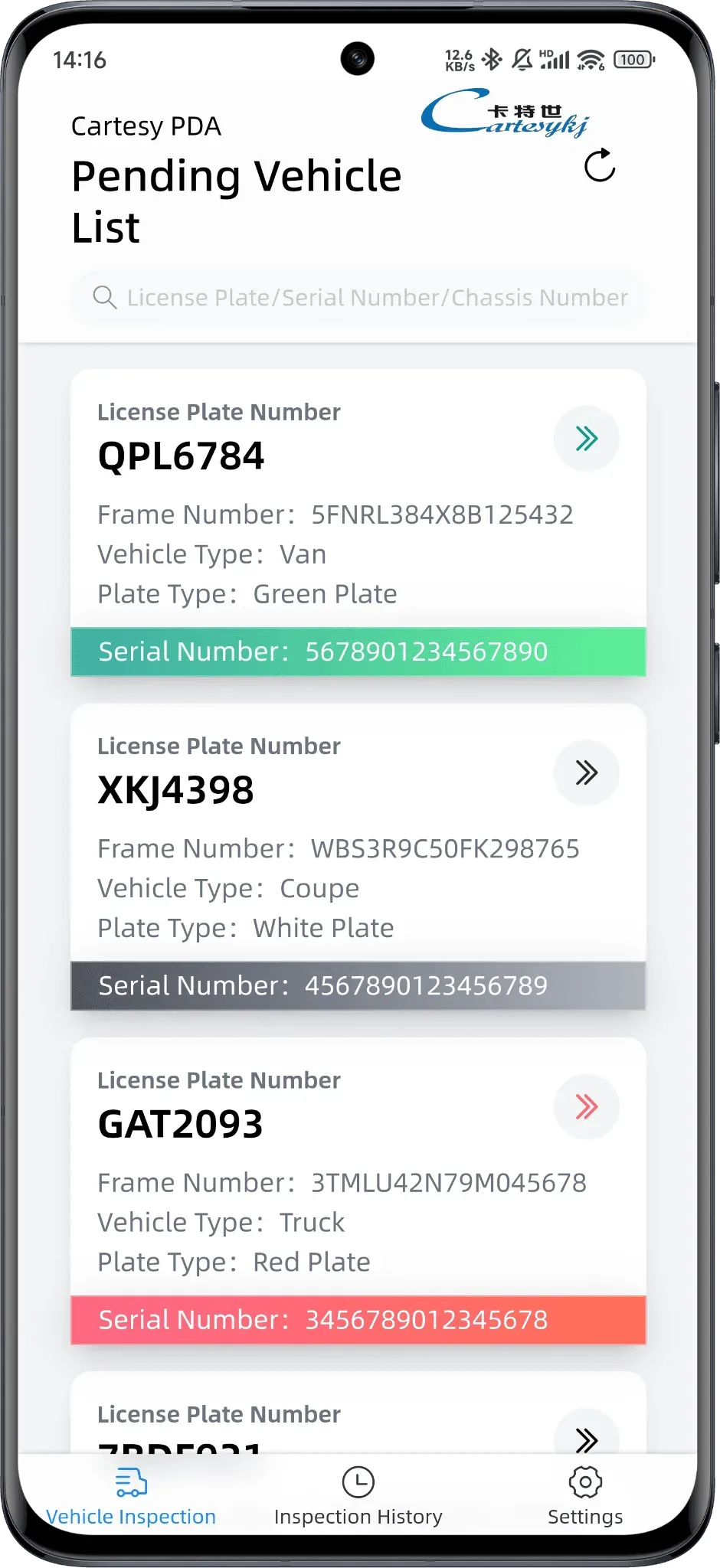
PDA Appearance Inspection System | Cartesykj
View ProductRequest a Quote
Request configuration and pricing for your project.
Share your vehicle type, inspection lane layout, target capacity, and required model configuration for LCD control instrument with touch screen | Cartesykj.
Share the project location, vehicle types, inspection scope, applicable standards, target throughput, site conditions and current stage. We will confirm the configuration scope before discussing pricing.