
Inspection Line Control & Data Management Systems
Industrial Control System | Cartesykj
Vehicle inspection facilities face ongoing challenges with signal noise, environmental vibration, and manual operator errors during continuous testing operations. An industrial control system resolves these issues by co...


Vehicle inspection facilities face ongoing challenges with signal noise, environmental vibration, and manual operator errors during continuous testing operations. An industrial control system resolves these issues by consolidating station hardware, automated motor sequences, and peripheral test instrumentation into a single ruggedized operating architecture. Built to withstand demanding shop-floor conditions, the Cartesykj platform provides real-time signal acquisition, automated pass/fail evaluation, and centralized reporting across individual test bays and high-throughput multi-station testing lines.
This technical guide examines system hardware configurations, operational sequencing, software features, and procurement considerations for line operators upgrading or specifying modern automotive testing infrastructure.
Table of Contents
- Verified Equipment Definition and Material/Application Scope
- Buyer Value and Sourcing Considerations Supported by Supplied Facts
- Verified Technology Trends and Classifications
- Documented Materials, Quality Controls, Certifications, and Components
- Practical Sourcing and Risk-Mitigation Guidance
- Frequently Asked Questions
Verified Equipment Definition and Material/Application Scope
In automated vehicle testing, an industrial control system serves as the central computing and command interface. The Cartesykj system integrates an industrial control computer engineered with specific operational attributes: high anti-interference capability, advanced anti-vibration resistance, optimized thermal heat dissipation, and long operational service life. These features allow reliable signal processing in environments where heavy machinery, inductive motor loads, and continuous vehicle movement generate severe electrical noise and mechanical stress.
The system cabinet measures 620 mm × 620 mm × 1640 mm (LWH), providing an ergonomic, self-contained enclosure designed to house computing hardware, communication interfaces, and power distribution modules directly on the testing floor.
Integrated Peripheral and Instrument Scope
Rather than functioning as an isolated workstation, the system features broad peripheral expandability. It interfaces directly with diverse diagnostic instruments, aggregating all test outputs into a unified data structure. Supported peripheral test instrumentation includes:
- Sound level meters: Digital acoustic acquisition for stationary and acceleration noise compliance.
- Exhaust gas testers: Multi-gas bench integration for gasoline vehicle emissions verification.
- Opacimeters: Optical smoke density evaluation for diesel engine exhaust streams.
- Headlight testers: Photometric intensity and optical beam alignment sensors.
- Tachometers: Real-time engine speed pickup via inductive, optical, or vibration sensing.
- Surveillance and monitoring: Station camera feeds and real-time bay oversight.
By synchronizing these auxiliary instruments alongside heavy-duty station mechanisms, the platform ensures that all sensor data is compiled directly into a single comprehensive inspection record without manual intermediate logging.
Buyer Value and Sourcing Considerations Supported by Supplied Facts
Specifying inspection infrastructure requires balancing mechanical capability against software flexibility and administrative control. Operations directors must account for throughput targets, regulatory reporting variations, and operator skill levels across different deployment regions.
Software Flexibility and Process Customization
Operational lines rarely follow identical testing sequences. The Cartesykj platform addresses variable regional standards through flexible test process configuration. Test protocols can be modified to follow regional sequences—such as running sideslip evaluation prior to roller brake testing, or performing opacity readings before acoustic checks. This adaptability prevents bottleneck formation at individual test stations.
International deployment is further supported by an expandable multilingual interface. The software incorporates an automatic language addition module, with baseline support for English, French, Russian, Thai, and Chinese. Operators can execute workflows in local languages while generating standardized reporting formats for oversight authorities.
Automated Evaluation and Fault Prevention
To reduce human inspection errors, the control system executes automatic pass/fail determinations. Recorded values are evaluated instantly against pre-configured regulatory thresholds. The software also incorporates integrated self-test diagnostics. This internal monitoring loop identifies hardware anomalies, communication losses, and sensor disconnects in real time, preventing mis-operation and halting testing before inaccurate records can be published.
Operational Parameter
System Specification / Capability
Procurement Impact
Enclosure Footprint
620 × 620 × 1640 mm (LWH)
Standardized floor allocation within control rooms or test bays
Environmental Protection
Anti-interference, anti-vibration, high heat dissipation
Continuous uptime near inductive roller motors and dynamometers
Instrument Interfaces
Sound meters, gas analyzers, opacimeters, headlight testers, tachometers
Single-system consolidation without secondary computing units
Architecture Modes
Centralized control or distributed control
Scalable from standalone lanes to multi-lane facilities
Language Support
English, French, Russian, Thai, Chinese (expandable)
Deployment versatility across diverse export territories
Reporting Engine
Diversified, customizable interface with auto pass/fail
Adaptable to varied regional inspection standards
Verified Technology Trends and Classifications
Modern testing lanes rely on specialized sub-controllers to manage electromechanical stations. An effective automotive inspection station control layout separates high-level supervisory commands from fast, deterministic field control loops.
Centralized vs. Distributed Control Architecture
Testing facilities can deploy the platform under two distinct operational frameworks based on facility throughput and floor plan geometry:
- Centralized Control: A single master computer processes all peripheral data, executes automated motor start/stop triggers, runs qualification logic, and manages printing. This model minimizes administrative hardware overhead in compact, single-lane facilities.
- Distributed Control: Individual sub-units manage specific test stations (such as independent brake or emissions stations) while networking back to the primary system. Distributed topology limits single-point processing delays and offers superior isolation during maintenance cycles in high-volume, multi-lane installations.
Motor Control Unit Inspection Line Operations
Stationary mechanical testing involves heavy drive machinery. A motor control unit inspection line relies on the industrial control computer to execute safe starting, load application, and vehicle positioning sequences. For roller brake testers and chassis dynamometers, motor startup must align strictly with wheel sensor feedback to prevent tire scuffing, motor overload, or sudden drive kickback. The control software coordinates these start, test, and emergency stop interlocks automatically.
Sideslip Tester Control Workflows
Precise steering geometry evaluation requires clean signal conversion. Operating a sideslip tester control plate demands responsive acquisition as the steering axle passes across the sensing platform at steady low speeds. The industrial control software filters vibration spikes, captures lateral plate displacement direction and magnitude, determines alignment compliance, and logs the metrics directly into the consolidated test file without manual operator entry.
Documented Materials, Quality Controls, Certifications, and Components
Equipment stability in harsh testing bays depends on component-level durability. The Cartesykj computing core uses an industrial-grade chassis designed for continuous operation under fluctuating ambient temperatures and continuous physical floor vibration caused by passing heavy commercial vehicles.
Internal Diagnostics and Error Mitigation
Software-level quality assurance is reinforced through automated self-testing routines. During lane startup and between test cycles, the software scans input/output communication channels, peripheral sensor links, and drive controller readiness. If a signal failure occurs—such as an uncalibrated headlight tester or a disconnected gas analyzer bench—the system alerts the lane technician immediately, locking out testing until the subsystem is verified.
Inspection Report Customization
Inspection authorities enforce distinct documentation standards. The control system incorporates a diversified reporting engine allowing layout adjustments, variable metric arrangements, and branded administrative headers. Because the system calculates pass/fail results automatically against preset benchmarks, generated printouts maintain strict audit compliance and prevent post-test metric falsification.
Practical Sourcing and Risk-Mitigation Guidance
Selecting an experienced vehicle inspection line equipment supplier requires careful verification of hardware compatibility, software flexibility, and factory support infrastructure. International buyers should evaluate potential equipment providers across several technical criteria:
- Interface Adaptability: Confirm whether the supplier provides open protocols or pre-configured software drivers for third-party peripheral tools like opacimeters and sound level meters.
- Language Expansion Support: Ensure that the operating interface can incorporate local vernacular without requiring proprietary core recompilation by the factory.
- Hardware Ingress and Vibration Ratings: Inspect physical chassis construction to confirm heat dissipation performance in non-climate-controlled inspection sheds.
- Architecture Scalability: Determine whether the software supports both centralized control for standalone lanes and distributed networking for future expansion.
Total Cost of Ownership (TCO) Factors
Procurement teams must evaluate total system lifecycle costs beyond the initial hardware purchase:
- Initial Capital Expenditure (CapEx): System cabinet, integrated industrial computer, peripheral communication cards, and software licensing.
- Installation and Integration: Interfacing cabinet I/O with roller drive panels, safety switches, and overhead display boards.
- Maintenance and Operational Expenditure (OpEx): Routine sensor recalibration, filter maintenance on thermal ventilation points, and minor software configuration updates.
By implementing a durable industrial control system from Cartesykj, station operators mitigate unexpected lane downtime, eliminate manual data entry discrepancies, and streamline compliance audits across high-throughput commercial and passenger vehicle inspection facilities.
Frequently Asked Questions
What are the primary functions of an industrial control system on a vehicle inspection line?
An industrial control system manages automated vehicle testing workflows, acquires data from dynamic sensors, controls station drive motors, displays instructions to drivers, performs automated pass/fail evaluations against regional standards, and compiles all metrics into a consolidated inspection report.
Which diagnostic instruments can be connected to the Cartesykj industrial control system?
The system supports extended connections to sound level meters, exhaust gas analyzers, opacimeters, headlight testers, tachometers, and surveillance monitoring systems, aggregating their data into a single diversified reporting format.
How does the system prevent operator mis-operation during testing?
The platform features built-in self-test diagnostics that automatically locate hardware or communication faults before testing begins. It also uses automated pass/fail assessment logic, preventing operators from manually entering or manipulating vehicle qualification results.
What is the difference between centralized and distributed control options?
In centralized control, a single industrial computer manages every station and instrument across the lane. In distributed control, individual stations process local operations independently while reporting back to the primary computer, which is advantageous for multi-lane facilities to isolate maintenance without stopping entire operations.
What languages are supported by the software?
The software features an automatic language addition architecture. Currently available options include English, French, Russian, Thai, and Chinese, with the capability to customize additional languages according to regional customer requirements.
For detailed engineering consultations, lane architecture planning, or to review verified equipment configurations for your vehicle testing facility, contact the technical integration team at Cartesykj.
Related Products
Compare related inspection systems
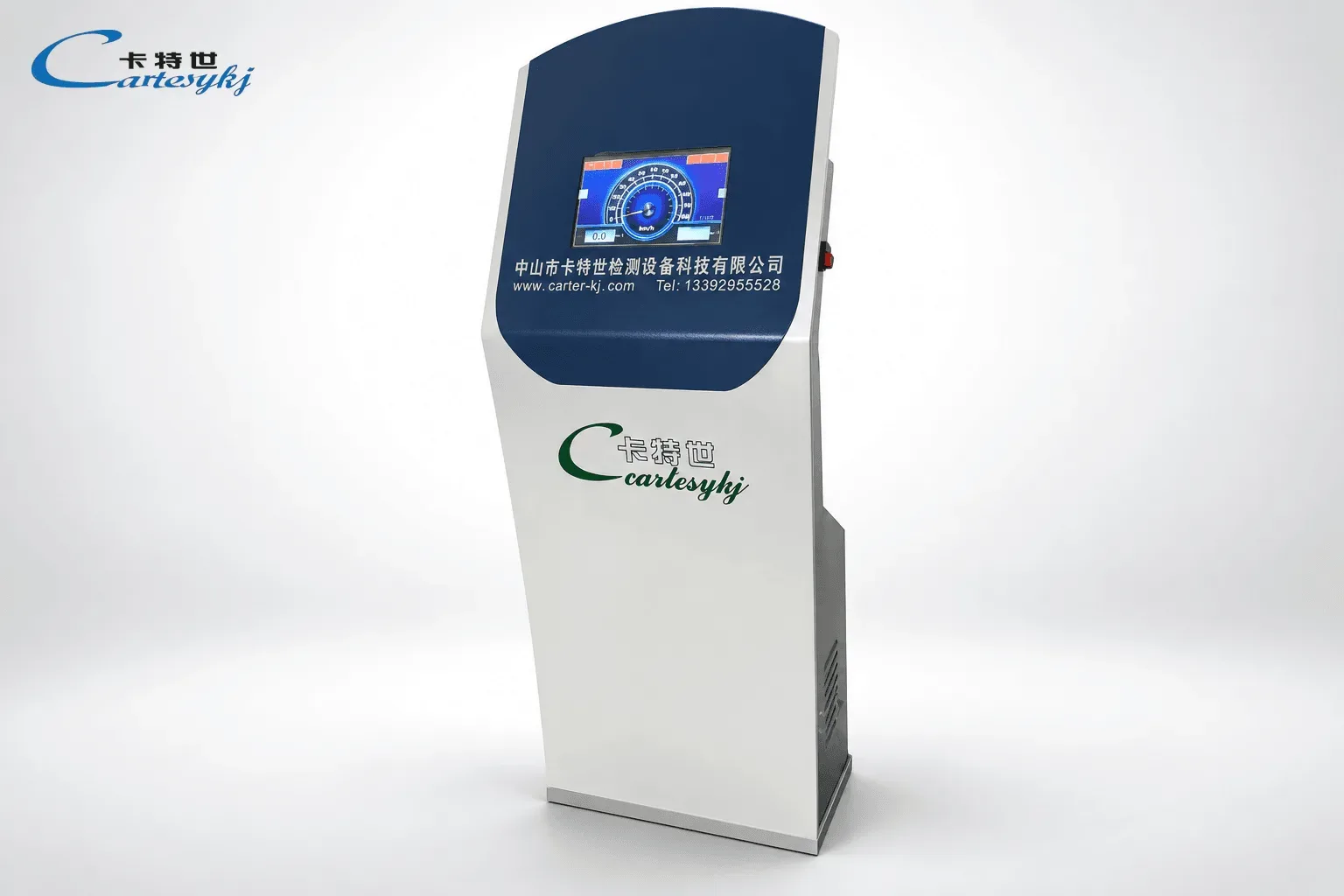
Inspection Line Control & Data Management Systems
LCD control instrument with touch screen | Cartesykj
View Product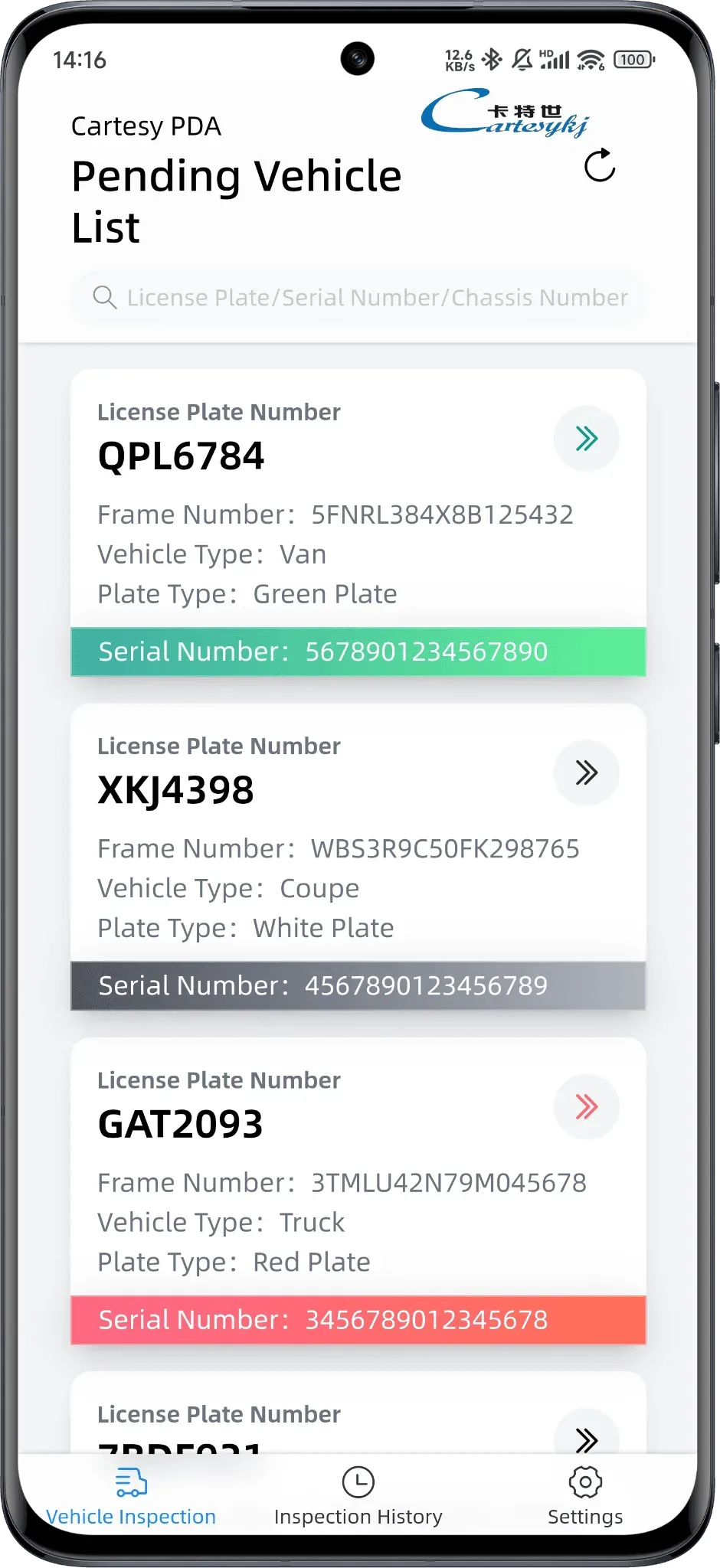
Inspection Line Control & Data Management Systems
PDA Appearance Inspection System | Cartesykj
View ProductRequest a Quote
Request configuration and pricing for your project.
Share your vehicle type, inspection lane layout, target capacity, and required model configuration for Industrial Control System | Cartesykj.
Share the project location, vehicle types, inspection scope, applicable standards, target throughput, site conditions and current stage. We will confirm the configuration scope before discussing pricing.