
Electric Vehicle Testing Equipment
Electric Vehicle Testing Equipment for Charging and Discharging Safety | CTXNY-3
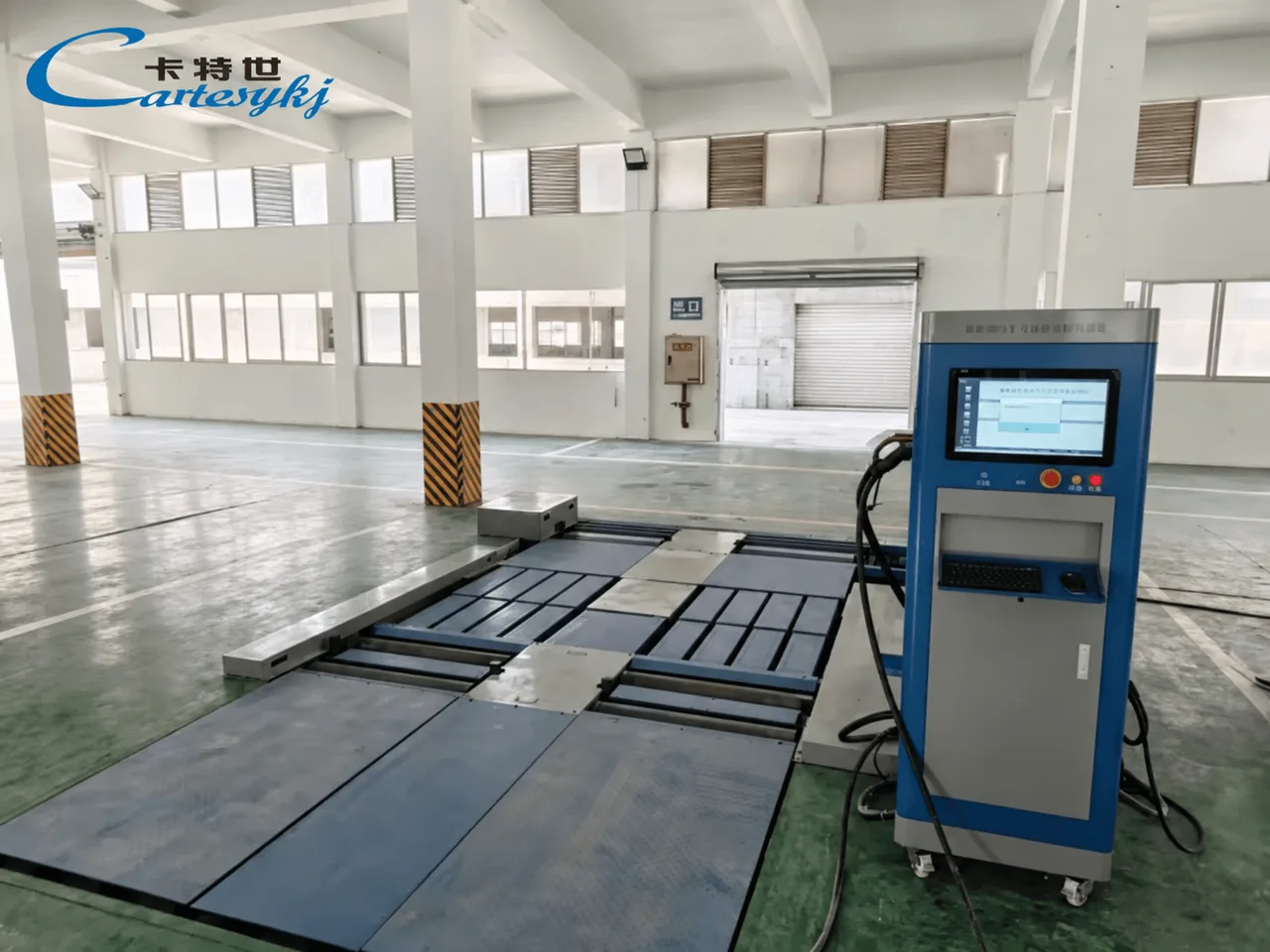
The CTXNY-3 combines electric vehicle testing equipment for charging and discharging safety inspection, including a four-wheel-drive EV chassis dynamometer, charging equipment, a cabinet with a computer and software, and
The CTXNY-3 combines electric vehicle testing equipment for charging and discharging safety inspection, including a four-wheel-drive EV chassis dynamometer, charging equipment, a cabinet with a computer and software, and an OBD diagnostic terminal. Its listed discharge checks include maximum traction-battery temperature and minimum individual-cell voltage. The inspection scope also covers selected drive-system temperatures and charging-socket electrical checks.
For an inspection station, the main task is to connect each inspection item to the correct vehicle operating condition and a clearly defined result. Charging measurements, discharge measurements, and electrical-safety checks serve different purposes. A useful system specification explains how each is performed and what information the resulting report provides.
What the System Checks During Charging and Discharging
The product information identifies different battery inspection items for charging and discharge. It also lists temperature checks for the drive motor, motor controller, and DC/DC converter. These functions should retain their individual definitions in the inspection procedure and report.
| Inspection area | Listed inspection item |
|---|---|
| Battery during charging | Voltage range of individual battery cells |
| Battery during discharge | Maximum traction-battery temperature and minimum individual-cell voltage |
| Drive motor | Motor temperature |
| Motor controller | Controller temperature |
| Electrical control system | DC/DC converter temperature |
The battery checks are explicitly associated with charging or discharge. The operating conditions for the motor, controller, and DC/DC converter temperature checks need to be established in the detailed test procedure.
This distinction matters when reviewing results. A value obtained during charging should remain identified as a charging measurement. A discharge result should be associated with the discharge conditions under which it was recorded.
The reported maximum and minimum values also need a defined data scope. The manufacturer should explain which temperature readings and voltage channels contribute to those results, rather than leaving the operator to assume that every possible measurement point is covered.
How the New Energy Vehicle Inspection Equipment Is Configured
The CTXNY-3 product description lists several components with separate roles in the inspection arrangement. Understanding those roles helps a station evaluate the complete configuration and identify the information needed for installation and acceptance.
Four-Wheel-Drive EV Chassis Dynamometer
The four-wheel-drive chassis dynamometer is the roller-based vehicle test platform included in the package. The product information provides the following dimensions:
| Dynamometer parameter | Listed specification |
|---|---|
| Drum size | Ø218 × 1,000 mm |
| Drum center distance | 430 mm |
These dimensions are stated in the supplied product information. They describe part of the mechanical arrangement; they do not establish the complete range of vehicles or test conditions supported by the installation.
Vehicle compatibility also requires a clearly defined axle-load rating, supported wheelbase and track-width ranges, tire restrictions, and operating-speed limits. The manufacturer should provide these requirements for the exact dynamometer configuration being offered.
The four-wheel-drive description should also be supported by documentation explaining the applicable vehicle types and test modes. Details such as front and rear roller control, synchronization, and any restrictions affecting particular drivetrains should be established before selecting the installation.
Computer, Software, and OBD Diagnostic Terminal
The listed configuration includes a supporting cabinet with software and a computer, together with an OBD diagnostic terminal. These components form part of the inspection package, but the component list alone does not explain how every inspection result is obtained.
For each reported value, the technical documentation should distinguish among information retrieved from the vehicle, measurements made by external equipment, and values calculated by software. This is particularly relevant to battery voltage and temperature information.
A vehicle-specific data list should identify the available parameters, their units, and the conditions under which they can be accessed. It should also explain how the software handles missing or unavailable information.
Including an OBD terminal does not, by itself, establish universal access to battery and motor data across all vehicle models. Compatibility should be documented for the vehicles the station intends to inspect.
Charging Equipment
Charging equipment is included in the product list, although its model and electrical output specifications are not identified in the supplied description. That part of the package therefore needs a separate technical specification.
The specification should identify the supplied charging unit, vehicle connectors, supported communication protocols, required electrical supply, and applicable charging arrangements. It should also explain which charging-related inspection functions are available with that configuration.
This keeps the charging equipment, vehicle compatibility, and inspection functions connected in the proposal.
Electrical Checks at Charging Sockets and Conductive Components
Alongside the battery and drive-system inspection items, the product information lists electrical-safety checks for charging sockets and conductive components.
The stated functions include:
Insulation resistance of the DC charging socket.
Insulation resistance of the AC charging socket.
“Potential equilibrium” between conductive components and an “electrical platform.”
“Potential equilibrium” between conductive components.
The insulation-resistance checks and the potential-equilibrium checks should have separate measurement definitions and reporting fields. Their results should also remain distinct from the battery-voltage and temperature information collected elsewhere in the inspection.
The term “electrical platform” requires a precise definition from the manufacturer. The documentation should identify the reference involved, the electrical quantity being measured, the reporting units, and the applicable evaluation criteria.
These details are necessary before presenting the potential-equilibrium functions as a specific electrical test. The wording should not be automatically converted into a claim about battery-cell balancing or another function that the supplied description does not establish.
The proposal should also identify which equipment performs each electrical measurement. The presence of an OBD terminal does not establish that the terminal itself measures charging-socket insulation resistance.
What the Discharge Results Can Establish
A discharge inspection becomes useful when its recorded values are connected to defined operating conditions and evaluation criteria. Maximum battery temperature and minimum individual-cell voltage should therefore be interpreted within the scope of the agreed procedure.
The report should show what was evaluated, the information available during the test, and the basis for any assessment. If a result is derived from vehicle-reported data, that should be distinguishable from an independently measured value.
The product description identifies discharge-related inspection items, but it does not establish a battery-capacity test cycle, a remaining-life prediction method, or a comprehensive battery-health assessment procedure. Those capabilities require separate documentation.
For this configuration, the broad term “battery safety” should be explained through the specific measurements and checks included in the inspection. A result from one defined test should remain associated with that test’s scope.
Integrating the System into a New Energy Vehicle Safety Inspection Workflow
Within a New Energy Vehicle Safety Inspection workflow, the system’s results need to be associated with the correct vehicle, operating condition, and completed inspection items.
A practical report should make the following information clear:
Vehicle identification and the configuration tested.
Whether a measurement relates to charging, discharge, or a separate electrical check.
The recorded value, unit, and applicable evaluation criterion.
The source of the measurement or diagnostic information.
Any unavailable parameters or incomplete inspection items.
These are reporting requirements to agree with the supplier and demonstrate on the proposed system. They should not be assumed from a software screenshot or a general description of computer control.
For a U.S. facility, selecting EV safety inspection equipment also requires written confirmation that the supplied configuration matches the intended vehicles and site. Charging connectors, communication protocols, electrical supply, installation requirements, and access to vehicle data should all be identified.
A representative acceptance demonstration should use a supported vehicle and the agreed inspection procedure. The review should establish whether the supplied configuration performs the specified checks and produces the required records. Any connection to an existing station management system should be included in that review if it forms part of the purchase scope.
Specify the Configuration Around Your Inspection Requirements
When discussing this electric vehicle testing equipment with a vehicle inspection equipment supplier, provide the target vehicle list, required charging and discharge checks, installation conditions, and reporting needs.
Request a proposal that identifies the CTXNY-3 configuration, the charging equipment supplied, the dynamometer’s confirmed operating limits, and the available OBD data for the intended vehicles. A representative inspection report should connect each offered function to a defined result.
That documentation gives the station a clear basis for evaluating how the system will handle battery, drive-system, and electrical checks within its charging and discharging safety inspection program.
Related Products
Compare related inspection systems
Electric Vehicle Testing Equipment
New Energy Vehicle Safety Inspection Equipment for Charging Safety Testing | EVTE-123-S-A-CTEV-3
View ProductRequest a Quote
Request configuration and pricing for your project.
Share your vehicle type, operating requirements, and required configuration for Electric Vehicle Testing Equipment for Charging and Discharging Safety | CTXNY-3.
Share the project location, vehicle types, inspection scope, applicable standards, target throughput, site conditions and current stage. We will confirm the configuration scope before discussing pricing.