
Brake & Axle/Wheel Load Testing Equipment
Multi-Axis Vehicle Axle (Wheel) Load Tester
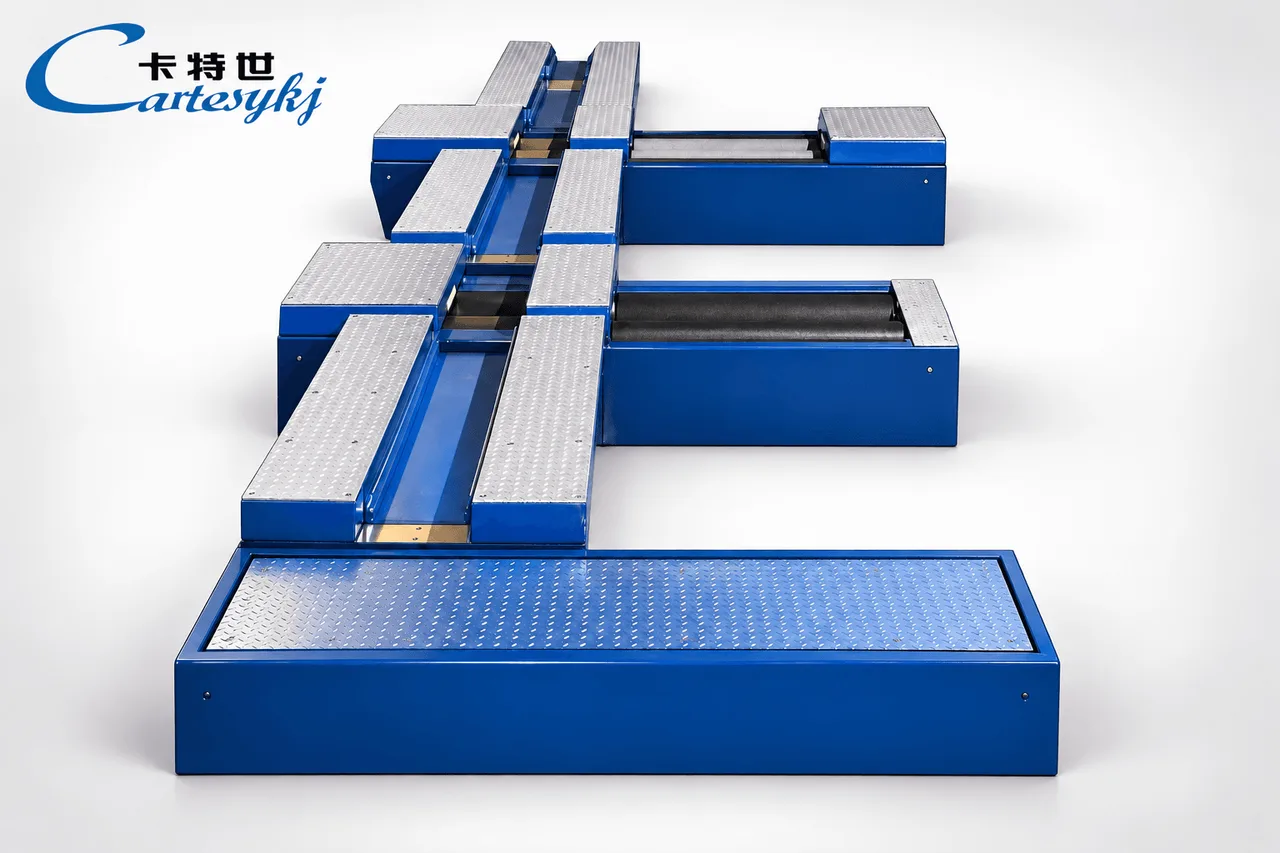
The CTZZ-13-4 and CTZZ-13-6 use 4 m or 6 m weighing plates to measure the same-side wheels of a tandem or tridem axle group together. Designed for axle and wheel-load measurement and vehicle curb-mass measurement, they use high-precision sensors and offer optional installation on both sides of an inspection pit.
Extended weighing plates for tandem and tridem axle groups
The Cartesy CTZZ-13-4 and CTZZ-13-6 multi-axle vehicle load testers are designed for axle and wheel-load measurement and vehicle curb-mass measurement on vehicles with tandem or tridem axle groups. Each model has two extended weighing plates, allowing the wheels on the same side of an axle group to stand on one plate together.
The CTZZ-13-4 has 4 m plates, while the CTZZ-13-6 has 6 m plates. Both models have a stated axle-load rating of 3 × 10000 kg. Plate length and the inner track dimension are the main differences. Selection therefore depends on axle-group span, wheel positions and available bay space, rather than the model name or overall vehicle length alone.
Where the tester fits
The equipment is suitable for inspection positions that need to weigh tandem or tridem axle groups. The extended plates provide a continuous support area for the same-side wheels of the group being measured. For commercial vehicles with these axle arrangements, a key selection check is whether the intended wheels fit fully within the usable weighing area.
Weighing results can be used in vehicle-mass records and, where the inspection procedure requires it, alongside data from other equipment such as a brake tester. The required outputs, report format and data connection should be defined in the inspection-line configuration. If the project requires separate readings for individual axles or a particular whole-vehicle weighing sequence, specify those requirements together with the vehicle axle layout.
Model specifications
| Specification | CTZZ-13-4 | CTZZ-13-6 |
|---|---|---|
| Stated axle-load rating | 3 × 10000 kg | 3 × 10000 kg |
| Weighing plate dimensions (quantity × length × width) | 2 × 4000 × 1150 mm | 2 × 6000 × 1150 mm |
| Length of each plate | 4000 mm | 6000 mm |
| Inner / outer track dimensions | 700 / 3000 mm | 800 / 3000 mm |
| Installation on both sides of an inspection pit | Optional | Optional |
The quantity of two refers to the left and right weighing plates. The inner and outer track dimensions describe two different dimensional boundaries, not the width of an individual tire. Vehicle checks should include the distances between the inner and outer wheel edges, as well as the span of the axle group.
The 3 × 10000 kg figure is the stated axle-load rating. It should not be treated as a universal maximum gross vehicle mass. Suitability also depends on individual axle loads, axle arrangement and wheel positions on the plates. The longer CTZZ-13-6 plates do not give that model a higher stated axle-load rating than the CTZZ-13-4.
Weighing arrangement and bay layout
The tester uses high-precision sensors for weighing. Its two long plates support the wheels on the left and right sides of the vehicle, allowing the same-side wheels of a tandem or tridem group to be measured on one plate. The 4 m and 6 m lengths provide options for different axle-group dimensions.
An installation on both sides of an inspection pit is available as an option. For a new bay, the weighing position and pit can be planned together. When adapting an existing bay, check pit width, support positions and vehicle access before finalizing the equipment layout.
Plate dimensions describe the load-bearing surfaces; they are not foundation construction dimensions. Foundations, supports and fixing arrangements should follow the installation drawing for the selected model. Power supply, controls and reporting requirements should also be defined in the equipment configuration.
Choosing between CTZZ-13-4 and CTZZ-13-6
- Check the axle-group span first. Supply the longitudinal wheel positions for the tandem or tridem group, so that the 4 m or 6 m plates can be checked against the same-side wheels to be weighed together.
- Check the track dimensions. Both models list an outer dimension of 3000 mm. Their inner dimensions are 700 mm and 800 mm respectively, and should be compared with the actual wheel arrangement.
- Check axle loads and bay space together. Longer plates affect the layout, but both models retain the same stated axle-load rating of 3 × 10000 kg.
- Define the inspection workflow. If the tester will work with a brake station, inspection software or an existing mass-record system, specify the required data outputs and interfaces before selecting the control configuration.
Frequently asked questions
When is a multi-axle load tester appropriate?
Consider the CTZZ-13-4 or CTZZ-13-6 when a vehicle has a tandem or tridem axle group and its same-side wheels need to be weighed together on one plate. Model selection depends on axle-group span, track dimensions, axle loads and bay layout.
What is the main difference between the two models?
The CTZZ-13-4 uses two 4000 × 1150 mm plates; the CTZZ-13-6 uses two 6000 × 1150 mm plates. Their inner track dimensions are 700 mm and 800 mm respectively. Both have a 3000 mm outer track dimension and a stated axle-load rating of 3 × 10000 kg.
Does 3 × 10000 kg mean the vehicle must weigh no more than 30 tonnes?
That conclusion cannot be drawn from this figure alone. It is the stated axle-load rating, while vehicle suitability also depends on individual axle loads and axle arrangement. Provide the number of axles, load on each axle and axle spacing so that the applicable vehicle range can be defined in the equipment configuration.
Can the tester be installed on both sides of an inspection pit?
Yes, this layout is available as an option. The arrangement should account for pit dimensions, vehicle access and equipment supports, with construction based on the drawing for the selected model.
Can the weighing data be used with a brake-testing station?
Weighing data can be an input to the relevant brake calculations. If you need automatic data transfer, combined reports or integration with an existing line, provide the interface, output-field and control-software requirements so that compatibility can be checked.
Request a model and layout proposal
Provide the vehicle types, tandem or tridem axle arrangement, individual axle loads, inner and outer wheel-edge dimensions, and a plan of the inspection bay. Include any requirement for pit-side installation or software integration. Cartesy can use these details to check the plate dimensions against the vehicle and site requirements and define the appropriate model and configuration.
Related Pages
Related Products
Compare related inspection systems
Brake & Axle/Wheel Load Testing Equipment
Motorcycle Brake Tester | CTJZMT-300B/CTMT-750 / CT3JZMT-750
View Product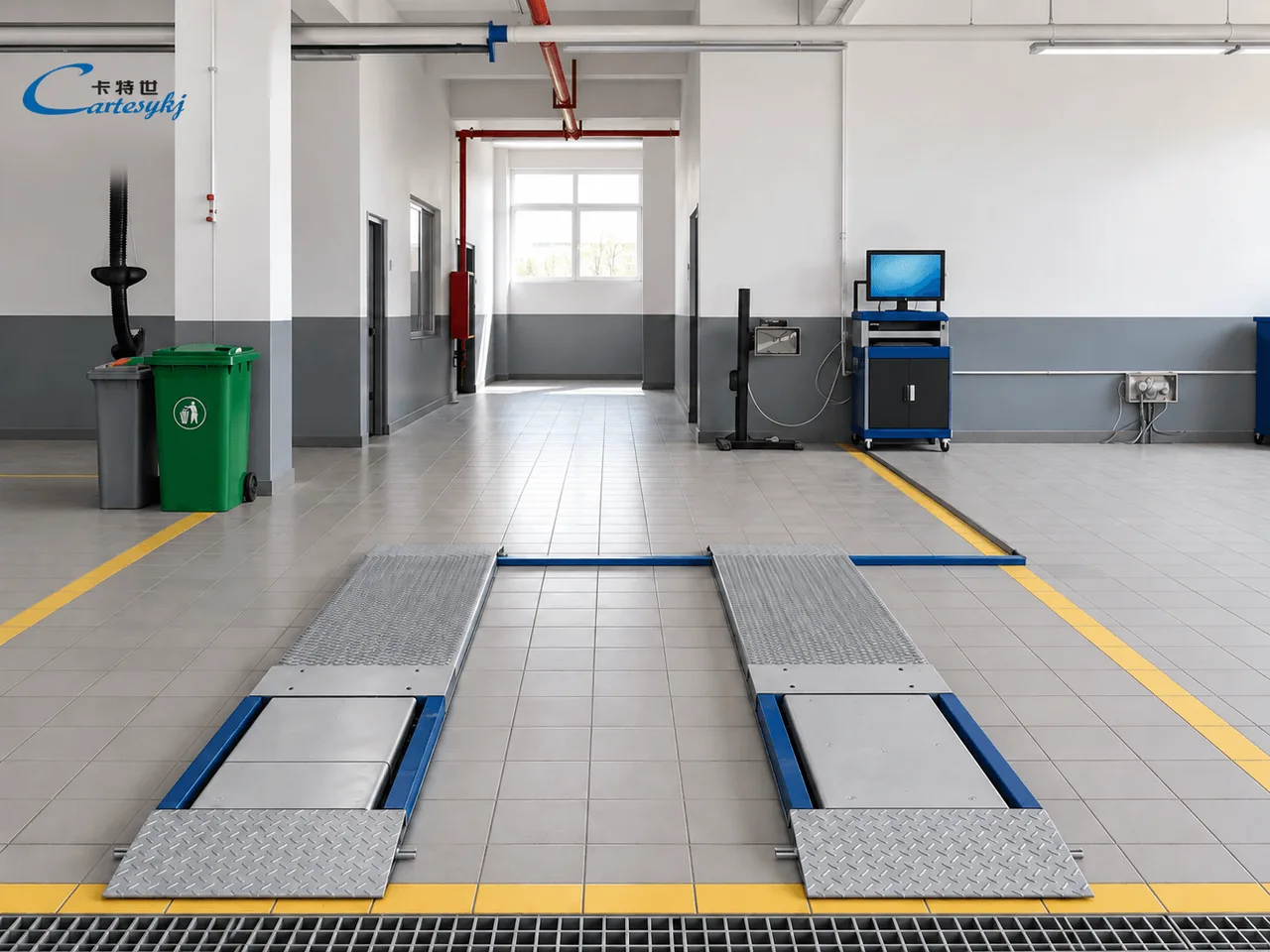
Request a Quote
Request configuration and pricing for your project.
Share your vehicle type, inspection lane layout, target capacity, and required model configuration for Multi-Axis Vehicle Axle (Wheel) Load Tester.
Share the project location, vehicle types, inspection scope, applicable standards, target throughput, site conditions and current stage. We will confirm the configuration scope before discussing pricing.