
Brake & Axle (Wheel) Load Testing Equipment
Brake Performance Tester for Cars and Motorcycles | CTFZ-10QM
The CTFZ-10QM is a brake performance tester described for both cars and motorcycles. It combines roller-based brake testing with wheel-load measurement and lists brake force, brake-force deviation, and a
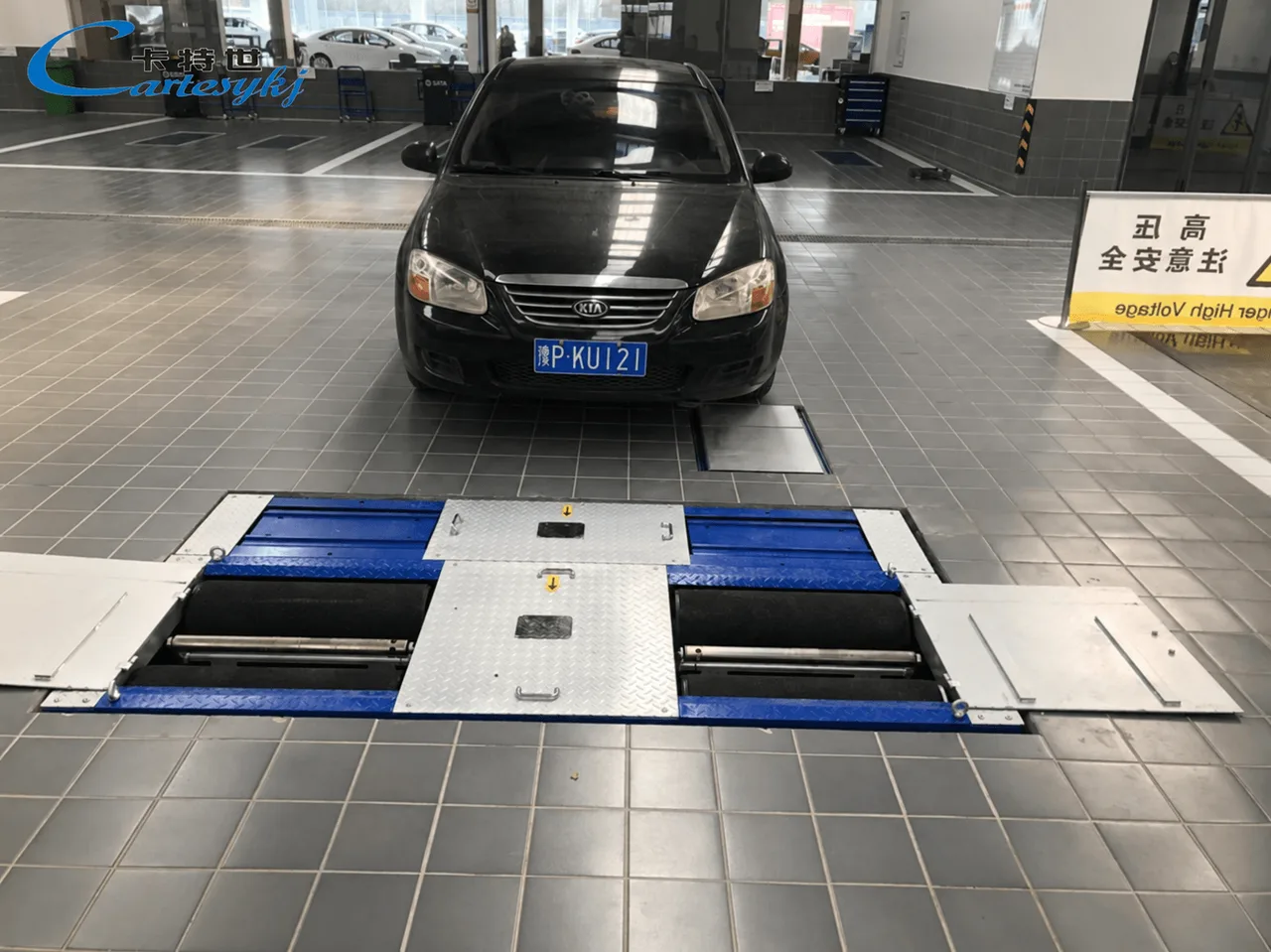
The CTFZ-10QM is a brake performance tester described for both cars and motorcycles. It combines roller-based brake testing with wheel-load measurement and lists brake force, brake-force deviation, and a brake-force-to-axle-load ratio among its inspection functions. The equipment includes eight wheel-load sensors and a calibration device.
For a station handling both vehicle categories, the key is to match the equipment configuration and test procedure to each vehicle. The shared model designation does not mean that car and motorcycle positioning arrangements, measurement comparisons, or assessment methods are identical.
What the Brake Performance Tester Measures
The product description identifies brake-force measurement and calculation as the main function of the CTFZ-10QM. For cars, it refers to measurements associated with the left and right wheels of an axle, together with brake-force deviation described as “process deviation” and “maximum deviation.” It also references a ratio between brake force and axle load.
These are related but distinct outputs:
Brake force describes the braking measurement obtained within the equipment’s specified range.
Brake-force deviation compares braking measurements according to the defined calculation method.
The brake-force-to-axle-load ratio relates braking information to a load input.
For an inspection report to be useful, each output needs a clear definition, unit, and evaluation method. The technical documentation should explain how the stated deviation values are calculated and which vehicle configurations and test procedures they apply to.
The description establishes that these functions are part of the equipment’s stated scope. It does not provide the formulas, measurement accuracy, or acceptance criteria needed to interpret every result.
Wheel-Load Measurement and Its Role
The CTFZ-10QM is described as having eight wheel-load sensors and the ability to test wheel load. This provides a documented load-measurement function alongside its brake-testing functions.
The load input matters when the equipment calculates a brake-force-to-axle-load ratio. The specification should identify which load value is used, how it is obtained, and how it corresponds to the braking measurement.
The number of sensors does not define the number of independently reported wheel readings. It also does not establish eight-wheel simultaneous testing or a complete vehicle-weighing arrangement.
For the proposed installation, the supplier should identify whether the configured system reports individual-wheel values, axle totals, or other calculated load information. The load-measurement range and accuracy should be provided separately from the sensor count.
CTFZ-10QM Technical Specifications
The supplied product information lists the following parameters:
| Parameter | Listed specification |
|---|---|
| Model | CTFZ-10QM |
| Intended application | Brake testing for cars and motorcycles |
| Roller diameter × length | 245 × 1,000 mm |
| Brake-force measurement ranges | 2 × (0–30) kN |
| Motor power | 2 × 11 kW |
| Power supply | 380 V, 50/60 Hz |
| Wheel-load sensors | 8 |
| Calibration provision | Calibration device listed |
These specifications relate to the CTFZ-10QM configuration described in the supplied sheet.
The brake-force ranges should remain expressed as 2 × (0–30) kN. They should not be presented as a single 0–60 kN measuring range. The manufacturer should explain how the quoted ranges correspond to the measurement arrangement for each supported vehicle configuration.
Similarly, 2 × 11 kW is the motor-power entry. It is not a complete statement of the installation’s total electrical demand.
For a U.S. installation, obtain the full electrical specification for the quoted unit, including phase, connection requirements, and the intended frequency configuration. The 380 V, 50/60 Hz listing alone does not define all site electrical requirements.
Roller Construction and Control Features
The product description specifies reinforced-steel construction and corundum-sand roller surfaces. It describes the roller surface as providing tire adhesion in dry and wet conditions.
These are stated construction features. The manufacturer’s operating documentation should define the applicable tire conditions, permitted surface conditions, and inspection requirements for the rollers. The description does not provide a friction coefficient or a quantified operating limit for wet conditions.
Automatic starting and a tire anti-skid program are also listed. Their functions should be explained through the operating sequence: the conditions required for starting, the conditions monitored by the program, and the equipment’s response.
This information is particularly relevant when the same model is used with different vehicle configurations. The control settings and operating instructions should correspond to the vehicle being tested.
Calibration and Measurement Verification
A calibration device is included in the product description. This is a useful item to identify in the equipment schedule, together with the measurements it is intended to support.
The technical package should explain the calibration procedure, the channels covered, and the records provided for the delivered equipment. It should also state the measurement accuracy and the conditions under which that accuracy applies.
A calibration device and a calibration record serve different purposes. The presence of the device does not establish a particular accuracy value or confirm that a specific calibration certificate accompanies the shipment.
For acceptance, the station should agree on the required verification documents and a demonstration of the relevant measurement functions.
Using the Unit as a Motorcycle Brake Tester
The source repeatedly identifies cars and motorcycles as intended applications. However, the detailed description of left- and right-wheel comparisons is written around a car axle. That comparison should not automatically be treated as the measurement method for every motorcycle configuration.
When specifying the unit as a Motorcycle Brake Tester, the supplier should identify the supported motorcycle arrangements and provide the corresponding positioning and test instructions.
The configuration review should cover the vehicle geometry, tire dimensions, permitted test load, positioning equipment, and any required accessories. It should also establish which measurements and calculations are available for that motorcycle arrangement.
For a facility adding the unit to existing car inspection equipment, the car and motorcycle procedures should be documented separately where their operating requirements differ. This gives operators a clear basis for selecting the correct procedure for each supported vehicle.
Its Role in a Motor Vehicle Inspection Station Solution
Within a Motor Vehicle Inspection Station Solution, the CTFZ-10QM can be specified around the brake- and load-testing functions described in its product information.
The station should define how those results fit its inspection records. Required information may include vehicle identification, the procedure used, measured values, calculation definitions, and the criteria applied to an assessment.
Any connection to existing station software should be included in the project specification. The supplied description does not define a reporting format, data interface, or automatic acceptance process.
Other inspection functions should also retain their own equipment scope. The CTFZ-10QM description supports a brake-testing and load-measurement role; it does not establish a complete inspection line configuration.
Specify the Tester for Your Vehicle Mix
When discussing the CTFZ-10QM with an Automotive Inspection Line Manufacturer, provide the intended car and motorcycle configurations, required test outputs, available electrical supply, and reporting needs.
Request a proposal that identifies the supported vehicles, permissible test loads, measurement specifications, positioning arrangements, calibration provisions, and operating procedures.
A model-specific technical package gives the station a practical basis for evaluating how this roller brake tester will perform its defined role across the intended vehicle mix.
Related Products
Compare related inspection systems
Brake & Axle (Wheel) Load Testing Equipment
Luxurious Flat Plate Brake Tester | 2CTHPB-3-4/4CTHPB-3B
View ProductRequest a Quote
Request configuration and pricing for your project.
Share your vehicle type, operating requirements, and required configuration for Brake Performance Tester for Cars and Motorcycles | CTFZ-10QM.
Share the project location, vehicle types, inspection scope, applicable standards, target throughput, site conditions and current stage. We will confirm the configuration scope before discussing pricing.