
Insights
Complete Vehicle Inspection Station Solution: The Equipment, Systems and Setup Guide
Planning a complete vehicle inspection station solution means more than buying a brake tester and a gas analyzer. This guide walks you through what an integrated inspection lane really covers, the difference between commercial and regulatory stations, the systems you must test, the equipment that does each job, and the software that ties results together. You will see real specification ranges from Cartesy equipment, a side-by-side station comparison table, a practical setup sequence, and the criteria for choosing a provider. Whether you run a periodic inspection center, a fleet depot or a workshop adding official testing, you will finish with a clear checklist for building a lane that is accurate, compliant and ready to scale.
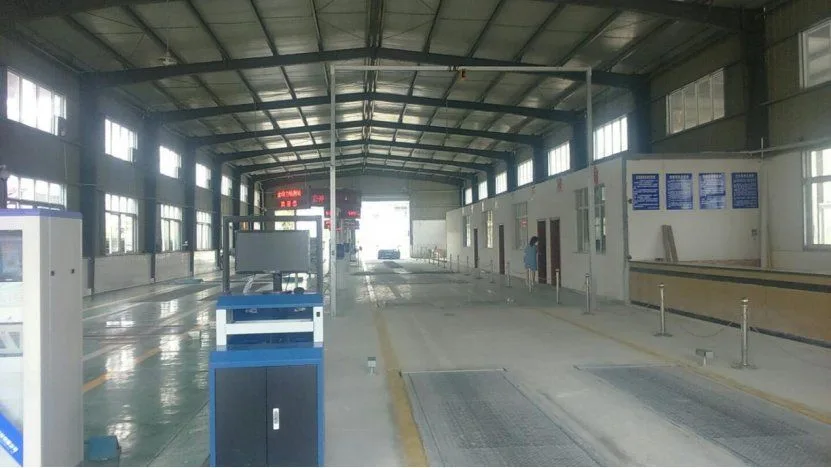
Table of Contents
- What a complete inspection station solution actually covers
- Which vehicle systems a full inspection must test
- The equipment behind an integrated inspection lane
- The software and data layer that turns readings into reports
- The operational benefits of going integrated
- A step-by-step setup sequence
- How to choose the right provider
A complete vehicle inspection station solution is a coordinated set of test equipment, lane control software and data systems that evaluates a vehicle's safety, performance and emissions in one continuous workflow. If you are planning a new station or upgrading an old one, the hard part is not any single machine. It is making sure the brake tester, the alignment gear, the emissions analyzer and the management software work as one system. This guide gives you the full picture so you can specify a lane that fits your site, your regulators and your daily vehicle volume.
What Is a Complete Vehicle Inspection Station Solution?
A complete solution is defined by integration, not by the number of machines you own. It is a lane where each test feeds the next and every result lands in one report.
Definition and Industry Scope
A complete vehicle inspection station solution combines mechanical safety testers, emissions equipment and a central control system into a single inspection workflow. In practice, that means a vehicle drives through once and the lane measures its brakes, axle and wheel loads, sideslip, suspension, lights and exhaust, then compiles the results into a standardized report.
The scope is broader than many buyers expect. A genuinely complete solution covers four product families:
- Vehicle safety testing equipment — brakes, axle load, sideslip, suspension, lighting and appearance inspection.
- Emissions testing equipment — petrol gas analyzers and diesel smoke opacity meters.
- Inspection control and management systems — lane control software, databases and reporting.
- Vehicle inspection lines — fixed or mobile configurations that physically connect the above into a driven lane.
Cartesy, for example, builds its portfolio around these four families, covering dozens of models and supporting customized development for specific customer requirements. You can see how these categories come together in our complete vehicle inspection line product range. The same equipment serves vehicle inspection centers, repair and maintenance workshops, technical training institutions, vehicle manufacturers with ABS test systems, and even military organizations. That range is why "complete" should be judged against your actual operating scenario, not against a generic product list.
Types of Vehicle Inspection Stations: Commercial vs. Regulatory
The two main station types share most hardware but differ in what the results are used for. Knowing which one you are building determines your accuracy, reporting and certification requirements.
Regulatory stations carry the heavier burden. They need instruments that meet national metrology requirements, software that resists result manipulation, and reports that can be submitted to a supervising authority. Cartesy's systems are built with multi-level access control, centrally managed data and customizable report formats, and the company holds ISO 9001 / 14001 / 45001 certification, ten CE export certificates, a public-security software test report, eight software copyrights and thirteen utility-model patents. Confirm which of these map to your local regulator before you write the tender.
The Role of Automation in Modern Inspection Lanes
Automation is what turns a group of testers into a lane. Its value shows up in cycle time and in consistency, not in novelty.
In a manual station, an operator drives the vehicle onto each pad, reads each display and types each number into a form. In an automated lane, sensors detect the vehicle position, the software triggers each test in sequence, and results flow directly into the report. A three-in-one automated inspection lane that merges brake, sideslip and axle load testing into one continuous pass can bring the per-vehicle cycle down to 3–5 minutes, compared with multiple stops and repositioning in a multi-bay layout.
Automation also removes a quiet source of error: the transcription gap between what an instrument shows and what the report says. When every module writes into a central database, the result is captured once, at source. Cartesy's lane software supports automatic station detection, so a station going offline does not stop the others, and it offers full-automatic, semi-automatic and manual modes that operators can switch between as needed.
Key Vehicle Systems Covered in a Complete Inspection
A complete inspection is defined by the systems it evaluates. Each system needs a specific measuring principle and a specific instrument; skipping one leaves a safety or compliance gap.
Brake and Suspension Performance Testing
Brakes are the single most important safety measurement in a periodic inspection. A proper test checks not just stopping force but balance and decay.
Roller brake testers measure the braking force of each axle and each wheel, then calculate left-to-right deviation, the ratio of brake force to axle load, and the parking brake force as a share of total vehicle mass. With a pedal-force gauge fitted, the system also records pedal effort and brake response time, and prints the force curve. Cartesy's roller brake tester range uses a sand-coated roller surface with a dry and wet adhesion coefficient above 0.85 and a service life beyond 200,000 cycles. A third-roller stop device or software-controlled shutdown prevents tire wear during testing.
Suspension testing evaluates how effectively the shock absorbers damp chassis movement and keep the tires in contact with the road. Worn dampers lengthen braking distance and destabilize a vehicle in a turn, which is why suspension results belong in the same report as brake results. Integrated three-in-one and four-in-one lines combine brake, axle load, sideslip and suspension testing into one drive-through sequence.
Wheel Alignment and Tire Condition Assessment
Wheel geometry and tire condition are measured indirectly through sideslip, directly through alignment racks, and physically through visual inspection.
A sideslip tester measures the lateral movement of the wheels as the vehicle rolls across a moving plate. That movement comes from the combined effect of camber angle and toe angle, and it tells you whether the vehicle tracks straight or scrubs its tires. Cartesy sideslip testers use a precision roller and a low-friction sliding plate; the double-plate version holds synchronous error below 0.04 mm for repeatable results. A quick reset device is available for dual-front-axle steering vehicles, and the tester can be used ahead of a four-wheel aligner to decide whether an alignment adjustment is needed at all.
A wheel alignment rack then measures the individual angles — camber, caster and toe — that the sideslip test only infers. Tread depth and tire condition still require a measured check and a visual record; automated tread-depth scanners and vehicle dimension scanners can be added where throughput justifies them.
Lighting, Optical, and Electrical Systems
Headlight testing is fast, but it catches defects that directly endanger other road users. A headlamp tester checks beam intensity and the vertical and horizontal aim of the low and high beams.
Cartesy's range includes manual and automatic headlamp testers such as the CTD-3C and the MQD series, plus a dedicated headlamp tester calibrator to keep the instrument itself in tolerance. Because headlight alignment is affected by vehicle load and tire pressure, operators should verify these before testing. Electrical checks extend the scope to battery and charging system health, and, for electric vehicles, to the high-voltage safety items covered by dedicated EV inspection systems — insulation, on-board diagnostics and charge/discharge safety under load.
Exhaust Emissions and Environmental Compliance
Emissions testing measures the pollutants a vehicle releases and verifies that it stays inside the legal limit for its class and fuel type.
Petrol engines are checked with an exhaust gas analyzer. Using non-dispersive infrared (NDIR) for CO, HC and CO₂, ultraviolet differential absorption for NO and NO₂, and an electrochemical cell for O₂, the analyzer calculates the excess air coefficient (lambda) from the measured gases. Cartesy gas analyzers are built to ISO 3930 / OIML R99 Class 0 or Class 1 accuracy requirements and comply with GB 18285 for spark-ignition vehicles under the simple transient cycle.
Diesel engines are checked with an opacimeter — a smoke meter that measures how much light a smoke plume blocks, expressed as an absorption coefficient. Cartesy integrates transmission opacimeters such as the MQY series for snap-acceleration and loaded-cycle tests under GB 3847, and can pair smoke measurement with a multi-gas diesel analyzer so that CO₂, NOₓ and soot density are captured in one station.
Essential Equipment for an Integrated Inspection Lane
The equipment list below is the physical core of any complete vehicle inspection station solution. Choose each piece by the vehicle classes and test cycles you actually run.
Roller Brake Testers and Suspension Analyzers
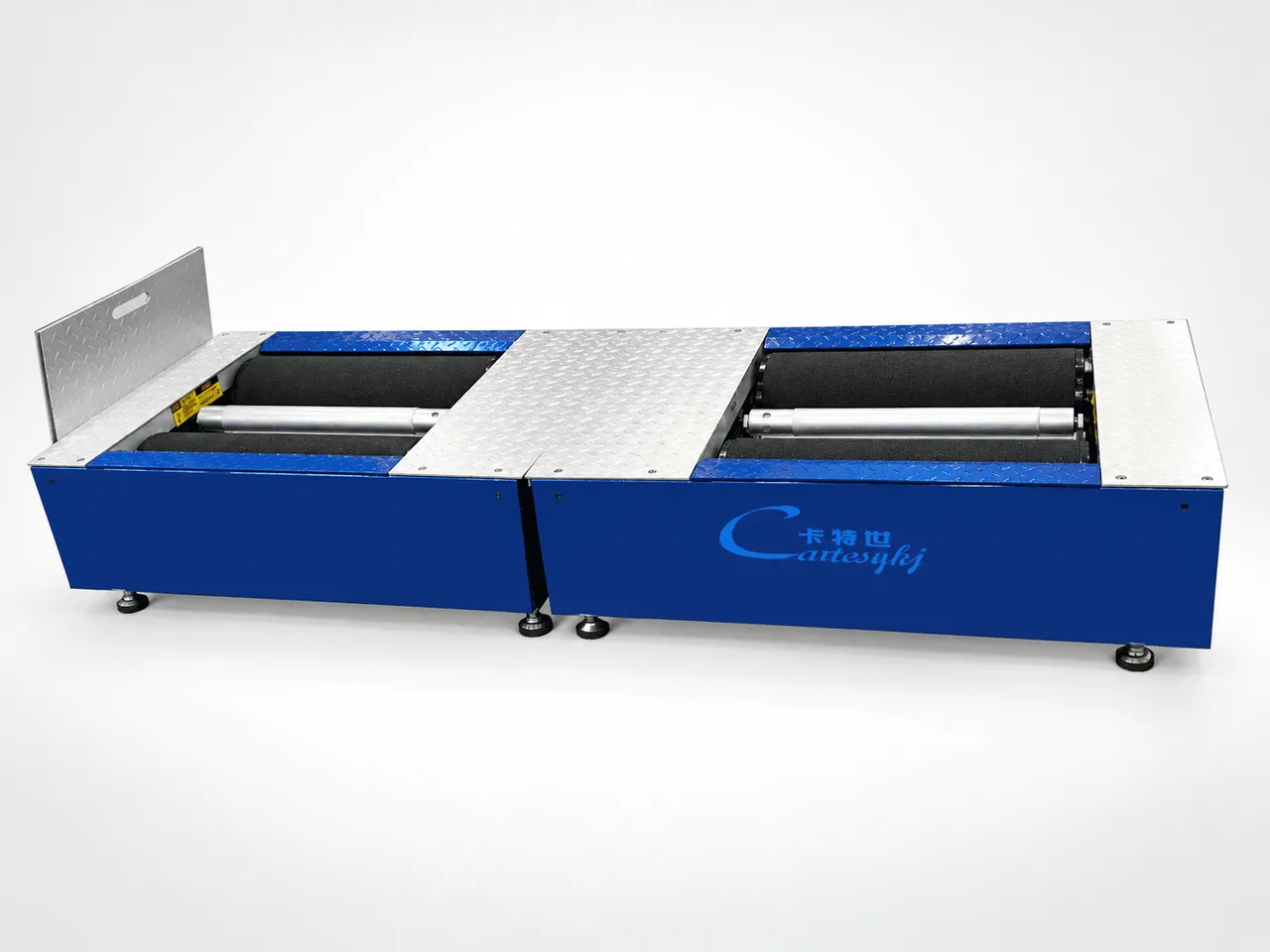
Start here, because brake data drives the pass/fail decision. Roller brake testers suit high-volume periodic lanes and heavy vehicles; flat plate testers suit fast drive-over workshops where pit construction is not an option.
Source: Cartesy roller brake tester and flat plate brake tester specification sheets. Values are manufacturer specifications; verify against your local metrology requirements before purchase.
A suspension analyzer then measures chassis damping and wheel play. In an integrated lane it reads the same vehicle while it is already positioned, so the extra test adds seconds rather than minutes.
Sideslip Meters and Wheel Alignment Racks
These two instruments cover different questions. The sideslip meter answers "does the vehicle track straight?" The alignment rack answers "which angle is out of tolerance?"
For sideslip, look for a rigid frame, a low-tension sliding plate and repeatable results. Cartesy's CTCH series covers 3T, 10T and 15T classes, with single-plate, linked double-plate and independent double-plate configurations. For alignment, specify the wheelbase and track width ranges that match your vehicle mix, and make sure the rack can export its measurements into the lane report rather than printing a separate sheet.
Emission Gas Analyzers and Opacimeters
Buy to the test cycle your regulator requires, not to the widest gas list on a datasheet.
- Petrol (NDIR/UV-DIR): CO, CO₂, HC, NO, NO₂ and O₂, with calculated lambda, for dual-idle and transient cycles under GB 18285. Our automotive exhaust gas analyzer guide explains the measurement principles in detail.
- Diesel (opacity): smoke density and light absorption coefficient for free-acceleration and loaded cycles under GB 3847.
- Integration: instruments should send records to the central PC station and file them under the vehicle's inspection record, so no one re-types emission results.
Headlight Testers and Visual Inspection Tools
A headlamp tester such as the CTD-3C or MQD series handles beam aim and intensity, and a calibrator keeps it accurate. Visual inspection tools complete the picture: a play detector for chassis free play, a vehicle dimension scanner for length, width and height, and a PDA-based appearance inspection system that lets inspectors log body, glass and lighting defects directly into the same report. Cartesy's laser-based dimension scanner, for example, measures length, width, height and wheelbase without stopping the vehicle, and reports a measurement error below 1%.
Station Management Software and Data Solutions
Software is what makes a lane "complete" rather than merely well-equipped. It controls the sequence, captures the results and produces the record the regulator or customer accepts.
Automated Lane Control and Centralized Data Acquisition
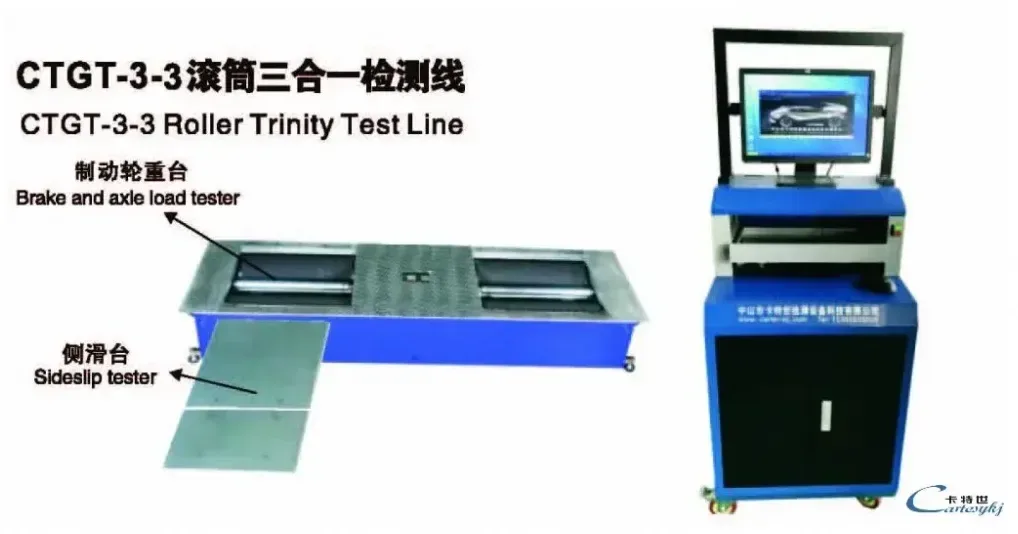
A central database should be the single source of truth for the station. Cartesy's Windows-based lane software manages all test information in one database with multi-level access rights, so records stay secure and traceable.
Practical capabilities to require include:
- Automatic station detection so one offline station does not block the others.
- Configurable station layout so equipment can be added or moved without rewriting source code.
- LED guidance displays that show results openly to the driver and reduce disputes.
- Fault alarms that flag problems before they corrupt a test cycle.
- Pre-entry of up to 30 vehicles, with repeat visits auto-filled from the plate number.
Inspection Report Generation and Digital Certification
The report is the product your customer or regulator actually receives. It should be generated from the database, not assembled by hand.
Cartesy's system produces standardized pass/fail reports automatically, along with yearly, monthly and daily summaries and pass-rate, first-inspection-rate and re-inspection-rate statistics. It can also locate vehicles that are due for inspection but have not appeared. Report formats are customizable, and the system supports paperless archive management, which matters when inspectors need to retrieve a result from months earlier.
Integration with Regulatory and Government Databases
For a regulatory station, local database connectivity is not optional. The software must be able to submit results to the supervising authority in the required format.
Cartesy's systems are designed for remote reporting to higher-level departments, with interfaces reserved for that purpose. Because every country defines its own protocol, treat connectivity as a project requirement: confirm the authority's interface specification early, and ask the provider to demonstrate a working submission rather than a slide that says "supported."
Benefits of Implementing a Complete Inspection Station Solution
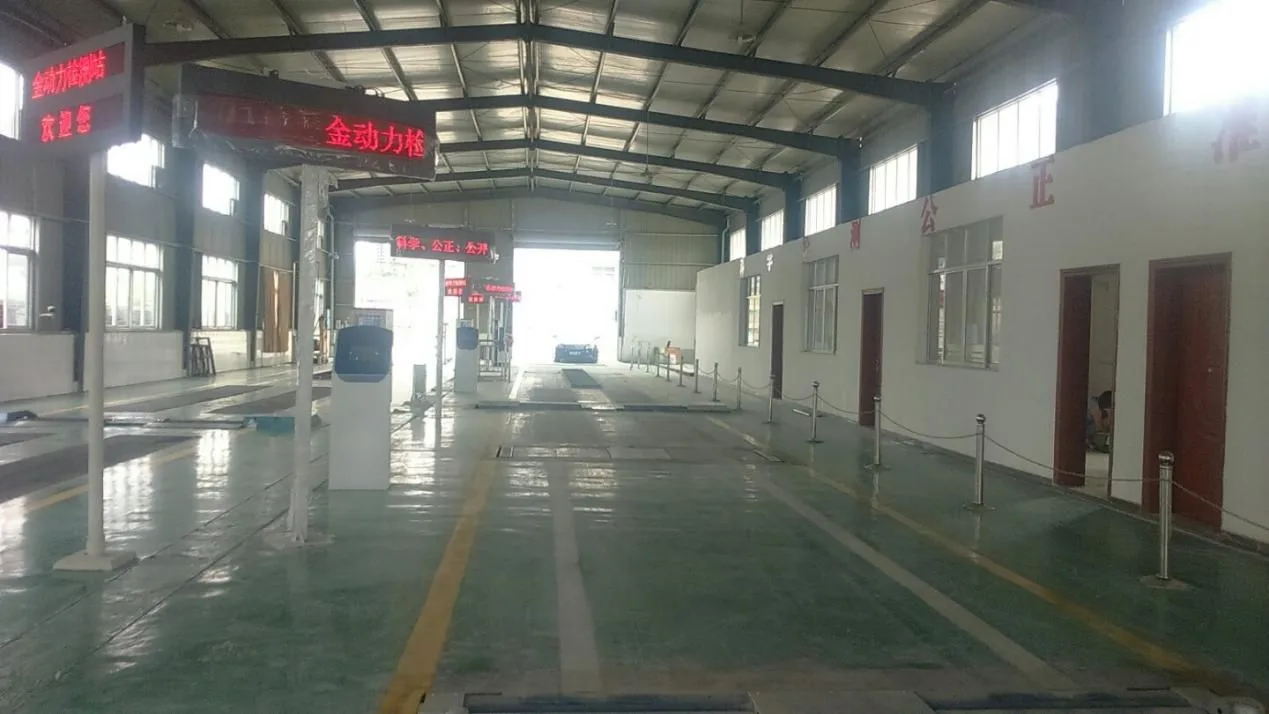
Integration pays back in three places: throughput, data integrity and the quality of the decisions the station produces.
Maximizing Vehicle Throughput and Operational Efficiency
The biggest gain comes from removing stops. A three-in-one lane reporting a 3–5 minute per-vehicle cycle replaces a route across several bays with one continuous drive-through. That is the difference between a queue that clears and a queue that spills onto the street.
Zero-excavation installation helps twice: it removes pit construction from the project schedule, and it lets you reconfigure the lane later without breaking the floor. Add automated vehicle routing and pre-entered vehicle records, and the operator's role shifts from data entry to supervision.
Minimizing Testing Errors and Fraudulent Results
Manual transcription is where accuracy goes to die. When every instrument writes straight into a central database, the number on the display and the number on the report are the same number.
Control is equally important. Multi-level user permissions limit who can change parameters, and an audit trail makes unusual patterns visible. For a regulatory station, that combination protects the license; for a commercial one, it protects the reputation.
Enhancing Road Safety and Environmental Standards
A station that tests brakes, suspension, alignment, lights and emissions in one pass is less likely to miss the defect that matters. Reliable data also means vehicles that should be off the road are identified, and clean vehicles are not held back by a measurement error. Over a full inspection year, that is the real return on a complete solution.
Steps to Set Up a Fully Functional Inspection Station
A station is a project, not a purchase order. Follow this sequence and you are less likely to discover a problem after the equipment has arrived.
Site Evaluation and Lane Layout Planning
Start with the site, not the catalog. Measure the available length and width, the floor load capacity, the power supply and the vehicle approach path. For a comprehensive line, a lane width of about 4 meters and a load capacity appropriate to the heaviest vehicle you will test — up to 15 tonnes for truck lines — are typical planning figures. Cartesy provides pre-sales layout drawings and power-cable routing plans based on your actual site conditions, which is the right time to settle questions about drainage, lighting and queue space.
Equipment Procurement, Installation, and Calibration
Specify the test cases before you sign: passenger cars, SUVs, light vans, heavy trucks or motorcycles each point to a different line class. Decide which modules are fixed and which are add-ons — gas analyzers, opacimeters and headlamp testers are commonly integrated later. Then plan for calibration and metrology verification. A tester that cannot be verified to the local standard cannot issue a compliant result, however good its repeatability. Cartesy's installation scope covers installation, commissioning and calibration through to acceptance testing.
Staff Training and Operational Commissioning
Training should cover more than button sequences. Cartesy's training program includes station function and site requirements, test items and standards, equipment structure and principles, electrical control, software and database operation, maintenance and common fault handling. Insist that your team can perform a daily check, recognize a drifting measurement and recover from a station fault before the station goes live.
How to Choose the Right Vehicle Inspection Station Provider
Equipment specifications are easy to compare; supplier capability is harder. These three criteria separate a vendor from a long-term partner.
Compliance with Local and International Regulations
Ask which standards each instrument is certified to and who verified it. Cartesy holds ISO 9001 / 14001 / 45001 certification, ten CE export certificates, a public-security software test report, thirteen utility-model patents and eight software copyrights, and its products have been verified by metrology institutions in multiple regions. Ask for the actual certificates, and check that the certification scope covers the model you are buying — not just the product family.
Modular Hardware and Scalable Software Architecture
Your station will grow. Choose hardware that can be reconfigured without major civil works and software that can add stations without a rewrite. Cartesy's modular design lets operators expand station functions and change line equipment freely without changing source code or hardware, and the same software platform runs fixed lines, mobile test lines and EV safety inspection systems. That continuity matters when you add a new vehicle class two years from now.
After-Sales Service, Maintenance, and Technical Support
A line that stops is a line that loses money. Look for a provider with a named service network, a stated response time and a clear spare-parts policy. Cartesy has built service centers around major cities including Beijing, Shanghai, Guangzhou, Chengdu and Wuhan, with on-site response within 24 hours on working days during the warranty period, free technical consultation, and paid-after-warranty service at cost for parts. Confirm what the warranty actually covers and how fast critical spares can reach your site before you commit.
Summary
A complete vehicle inspection station solution is only complete when the testers, the lane control and the reporting system work together. Specify the vehicle classes first, match each system to the right instrument, insist on data that flows automatically into one report, and choose a provider whose certifications and service network you can verify. With those four decisions made, the right configuration becomes obvious.
Ready to scope your lane? Share your site dimensions, daily vehicle volume and the vehicle classes you need to test, and our engineering team will prepare a layout and a tailored system quote.
About the Author
Cartesy Engineering Team — the vehicle inspection equipment division of Cartesy (Zhongshan Cartesy Diagnosis Technology Co., Ltd.), with more than ten years of experience in the R&D and manufacture of vehicle testing equipment, products serving users in 60+ countries and over 3,000 customers in China, and a founding team with over 30 years of electromechanical product experience.