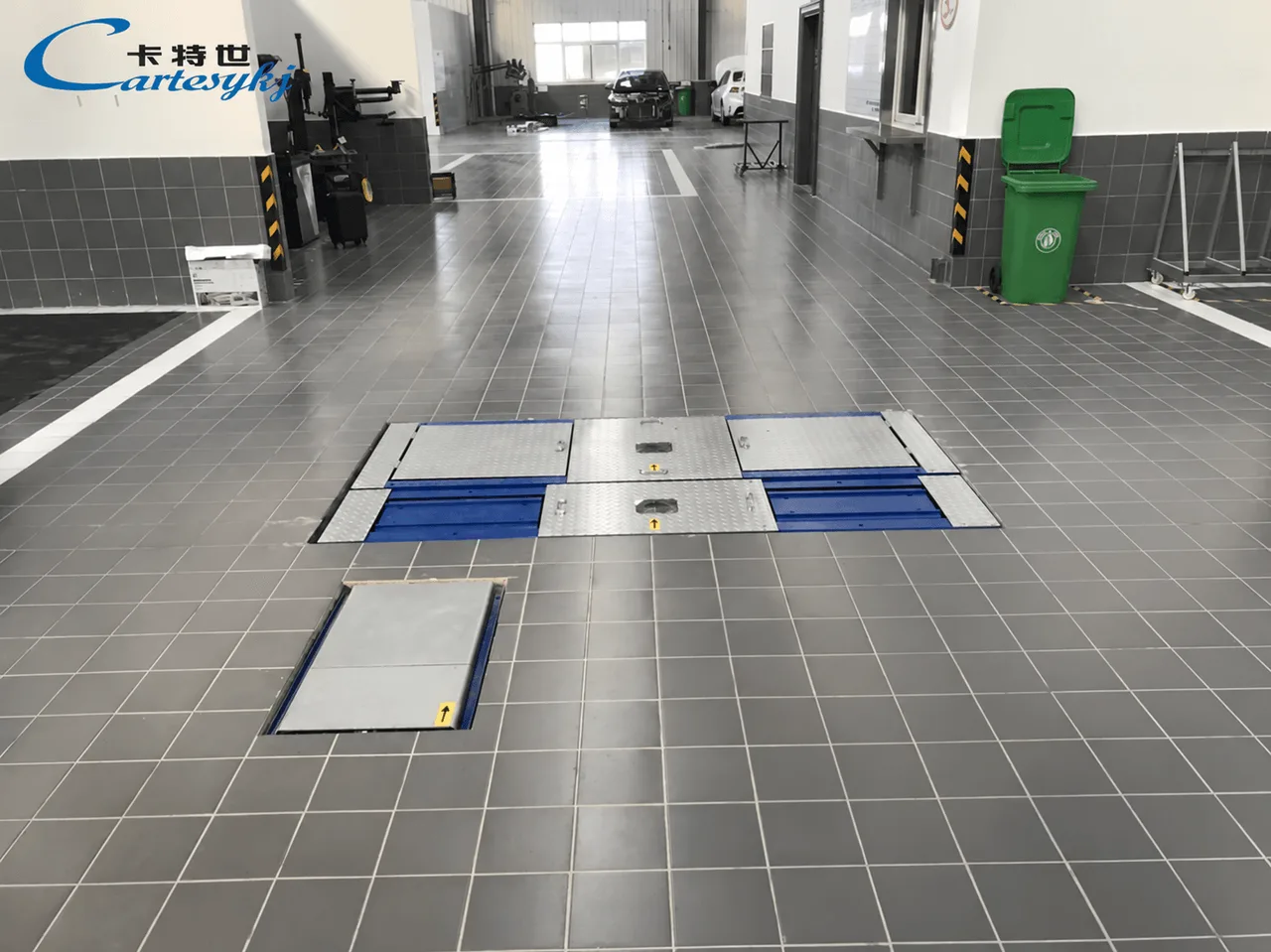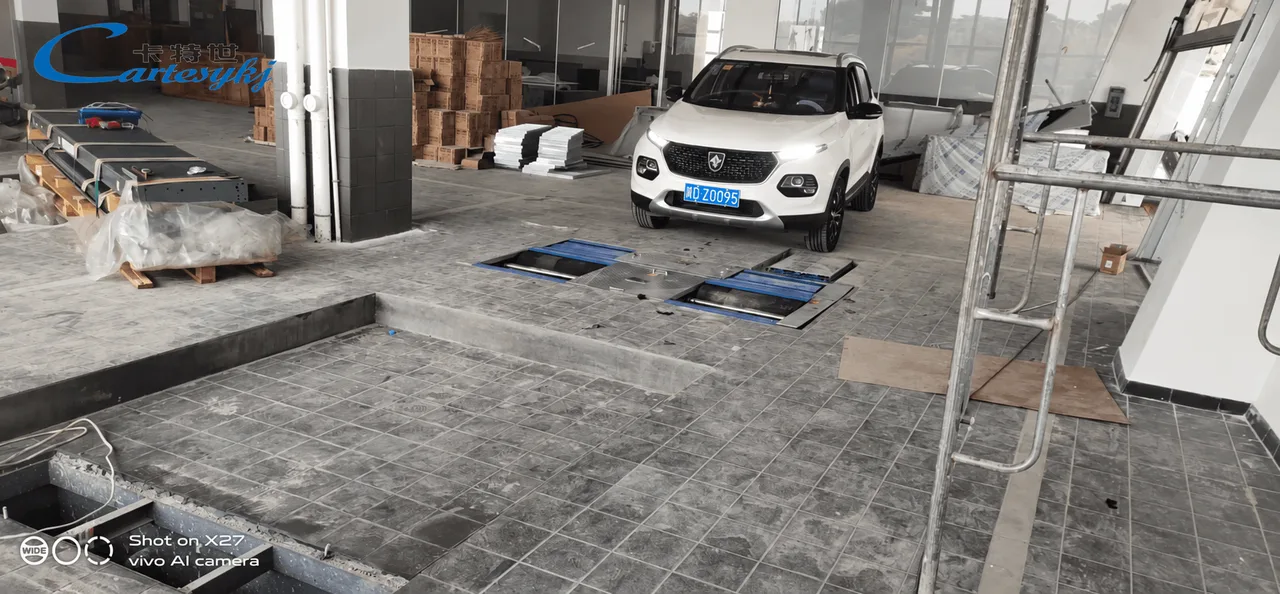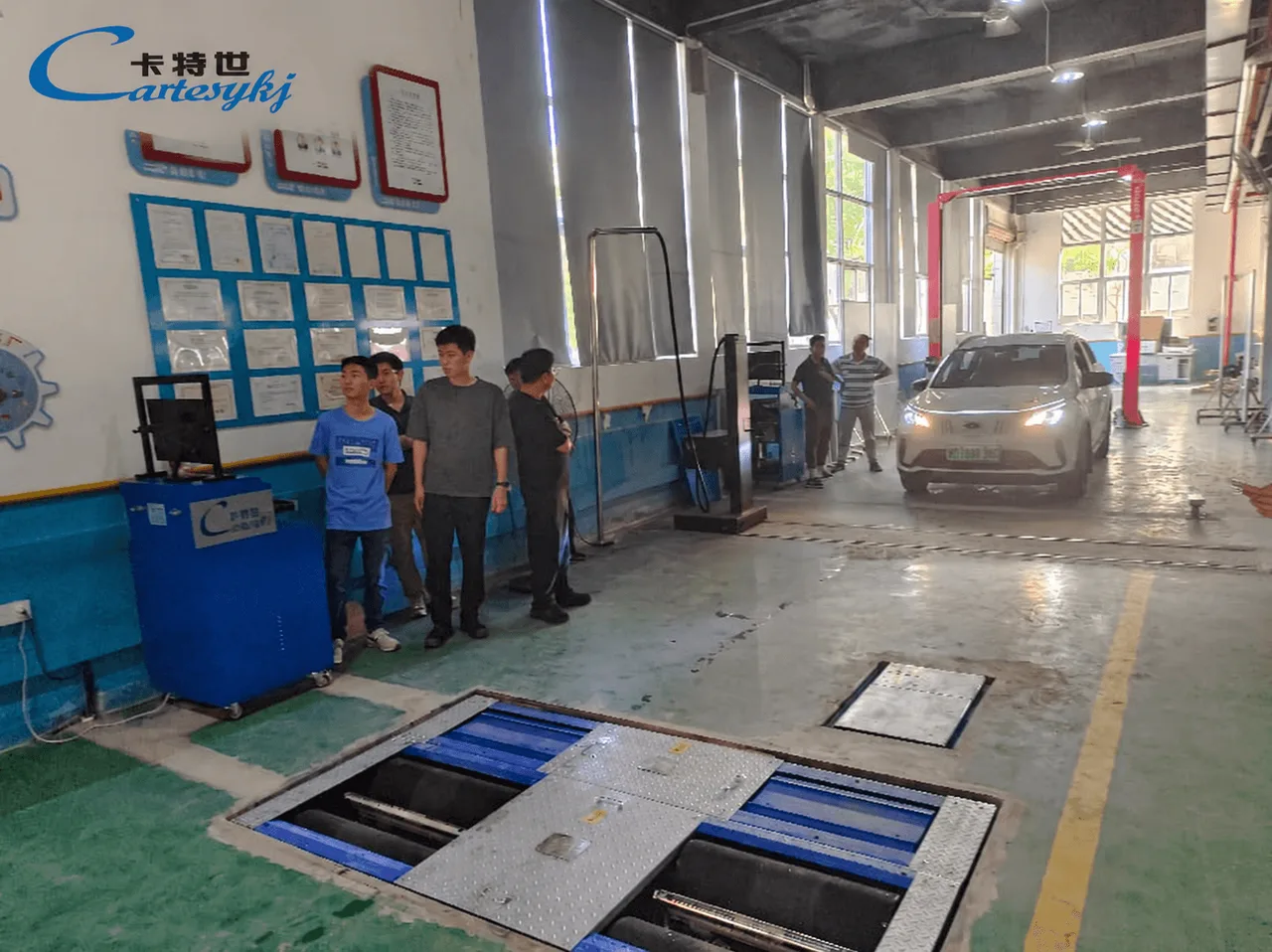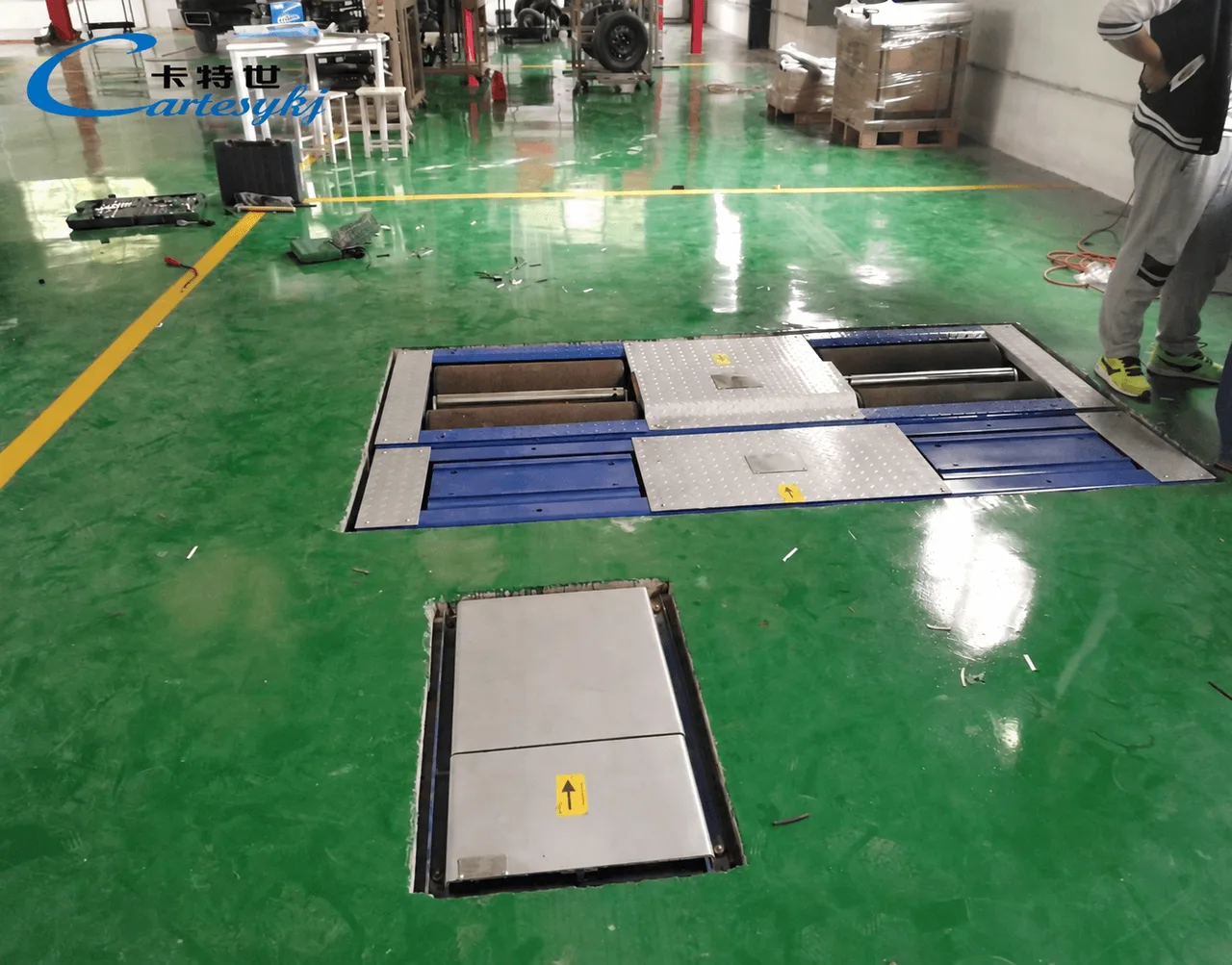
Project
3 Ton Four in One Car Inspection Line CTGT 3 4
Are you struggling to speed up vehicle diagnostics without sacrificing valuable shop floor.
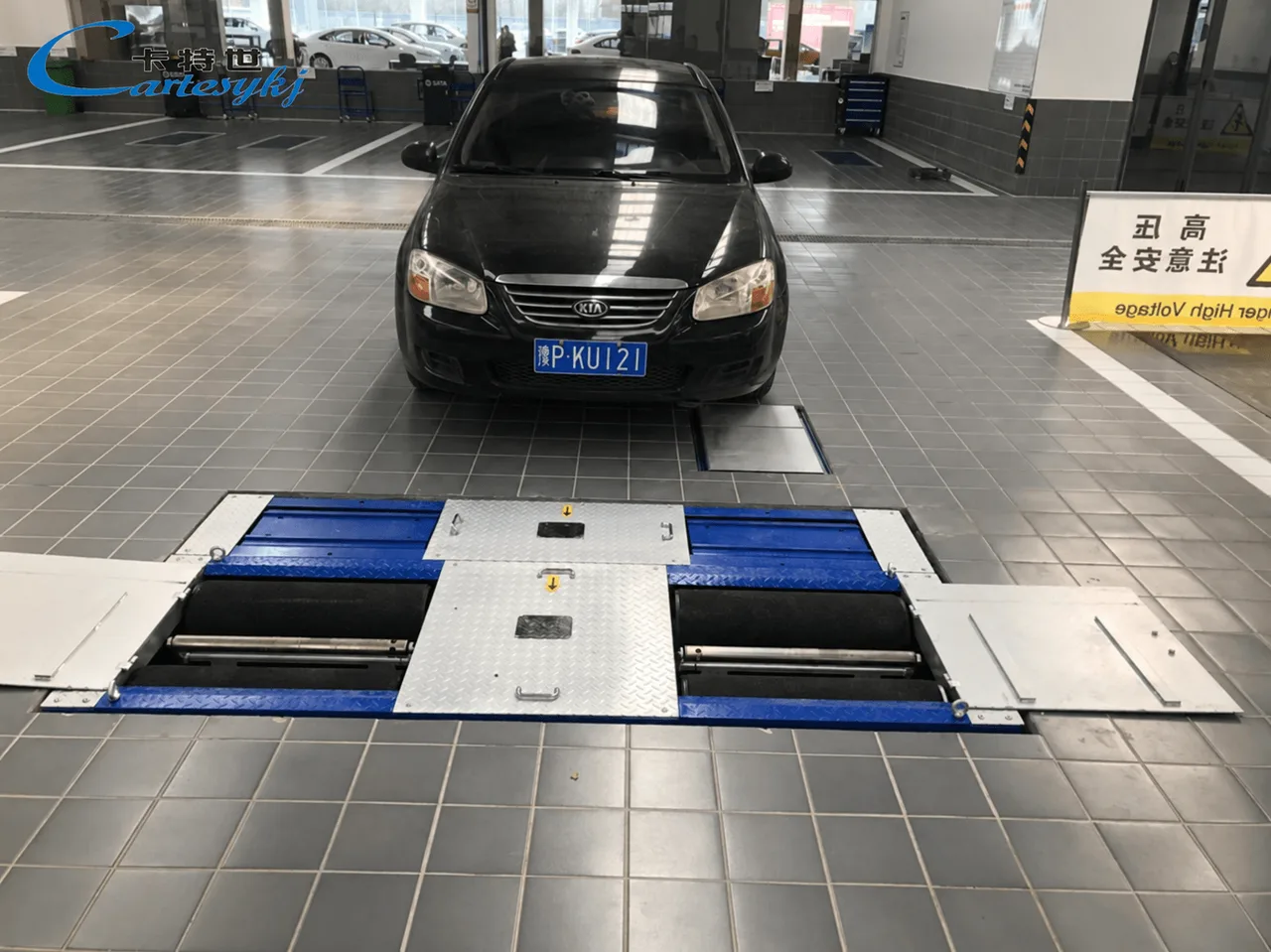
Are you struggling to speed up vehicle diagnostics without sacrificing valuable shop floor space?
In the auto service industry, bottlenecked testing bays directly hurt your bottom line. Precision matters, but so does speed.
That's where an integrated car inspection line completely changes the game.
Instead of juggling separate diagnostic bays, a compact four-in-one car inspection line consolidates a brake tester, wheel load tester, vehicle side slip tester, and suspension tester into a single, automated workstation. It saves floor space, slashes inspection time, and ensures full safety compliance on every vehicle that enters your bay.
Whether you manage a busy 4S dealership or a growing repair workshop, choosing the right automotive testing equipment from an experienced vehicle inspection equipment manufacturer is a game-changing investment.
In this guide, you'll discover how a 3-ton multi-functional system can transform your workshop's workflow, accuracy, and profitability. Let's dive right in!
What is a "Four-in-One" Car Inspection Line?
A four-in-one car inspection line is a compact, automated diagnostic testing system that consolidates essential vehicle safety checks into a single, high-efficiency lane. Engineered for modern periodic technical inspections (PTI), automotive repair networks, and testing organizations, it delivers accurate vehicle diagnostic data in rapid succession without the need to lift or repeatedly reposition the vehicle.
Instead of operating standalone testing stations across different areas of a workshop, a four-in-one test lane integrates four fundamental dynamic evaluations into one unified workflow:
- Sideslip / Tracking Testing: Rapidly checks front and rear wheel alignment and dynamic toe angles as the vehicle rolls across the plate.
- Wheel Load & Axle Weighing: Measures individual wheel and dynamic axle loads to provide the baseline data required for precise brake calculation.
- Suspension Diagnostic Testing: Evaluates chassis damping performance, road-holding capability, and shock absorber efficiency.
- Brake Performance Testing: Accurately calculates braking force, deceleration efficiency, and side-to-side brake imbalance via plate or roller testing systems.
By centralizing these critical checkpoints into an integrated drive-over platform, this layout significantly shortens total testing times, reduces facility footprint requirements, and feeds all real-time diagnostic results directly into a central PC evaluation system for instant pass/fail reporting.
Key Components of the Automotive Testing Equipment
A high-performance car inspection line relies on synchronized diagnostic modules to evaluate safety-critical systems in seconds. We build our automotive testing equipment with low-profile, drive-over mechanics that deliver rapid diagnostic throughput without requiring ground excavation or vehicle hoists.
Brake Tester (The Core)
The brake tester serves as the operational center of our inspection system. Designed for high-repetition testing environments, it evaluates service and parking brake performance with pinpoint accuracy.
- Instant Dynamic Evaluation: Measures individual wheel braking force, axle imbalance, and overall deceleration efficiency in real time.
- Flexible Setup: Available in heavy-duty roller profiles and ultra-flat plate brake tester systems engineered for fast drive-over testing.
- Low-Clearance Friendly: The flat approach profile accommodates sports cars and low-slung passenger vehicles without bottoming out.
Wheel Load Tester
Precise brake calculation requires exact weight data. Our integrated vehicle axle wheel load tester records individual wheel and total axle weights the moment the vehicle crosses the plates. For multi-axle commercial platforms or mixed-fleet facilities, we deploy our heavy-capacity multi-axis vehicle axle wheel load tester to establish baseline weight distribution data, ensuring all brake force calculations comply strictly with regulatory standards.
Vehicle Side Slip Tester
Our dynamic vehicle side slip tester assesses front- and rear-axle tracking in less than three seconds. As the vehicle drives across the floating test plate, the sensor translates dynamic toe deviations into meters-per-kilometer side-slip values, instantly detecting:
- Improper toe-in or toe-out alignment
- Uneven tire wear tendencies
- Steering geometry defects that compromise vehicle stability
Suspension Tester
Chassis dynamics and damping efficiency dictate road holding. Our suspension tester and joint play detection modules inspect axle mounts, ball joints, and shock absorbers under authentic road-force conditions. By utilizing lateral and longitudinal drive-over excitation, the system uncovers worn components, damping imbalances, and chassis wear without lifting the vehicle off its wheels.
Optional Add-Ons to Complete Your Inspection Station
A standard car inspection line covers the essential mechanical safety checks, but modern periodic technical inspections demand a fully integrated testing workflow. We offer modular diagnostic add-ons that sync straight into our central software, allowing your workshop to handle emissions and beam alignment without slowing down vehicle throughput.
Automotive Exhaust Gas Analyzer (Model CTW-511)
Regulatory compliance requires fast, precise tailpipe diagnostic tools. Our digital automotive exhaust gas analyzer integrates directly into the inspection line to assess petrol engine emissions instantly.
- Immediate Readings: Accurately measures CO, CO2, HC, O2, and calculates Lambda values in real time.
- Seamless Networking: Transmits test records directly to the central PC station, logging emission data under the vehicle's primary inspection file.
- Fast Warm-Up: Engineered for rapid readiness, keeping daily vehicle lane throughput moving efficiently.
Motor Vehicle Headlamp Tester (Model CTD-3C)
Proper beam orientation is vital for road safety and passing official vehicle checkups. Integrating our vehicle headlight tester lets technicians verify beam intensity, cut-off lines, and pitch alignment in seconds.
- High-Precision Optical Chamber: Evaluates high beam, low beam, and fog light patterns with exact digital readouts.
- Broad Lighting Compatibility: Ready for standard halogen setups as well as high-intensity LED and Xenon systems.
- Smooth Guide-Rail Mobility: Moves cleanly along precision floor tracks to service both headlights without shifting the car inspection line setup.
Technical Specifications of the 3T Inspection Line (CTGT-3-4)
We designed the CTGT-3-4 car inspection line to deliver precise, automated diagnostic results for passenger cars, low-clearance sports models, and light commercial vehicles without requiring deep excavation or dedicated inspection pits. Below are the core technical parameters that power our standard 3-ton test lane.
Core Technical Parameters
| Specification | Details / Range |
|---|---|
| Maximum Axle Load | 3,000 kg (3 Tons) |
| Installation Profile | Surface-mounted, ultra-low drive-over height |
| Integrated Test Modules | Brake tester, wheel load tester, side slip tester, suspension tester |
| Vehicle Compatibility | Passenger vehicles, EV fleets, light commercial vans |
| Data Transmission | Digital interface, automated cycle routing |
| Network Protocol | ASA-Net compatible, PC-supported processing |
Operational Capabilities
- Zero-Excavation Setup: The extremely low profile allows direct surface mounting, removing the structural costs and downtime associated with floor cutting or pit construction.
- Rapid Throughput: Automated sensor arrays measure dynamic axle weights, braking forces, toe deviation, and chassis play in one continuous drive-through sequence.
- Centralized Data Acquisition: Every module feeds live test metrics into our inspection line control data management systems to generate instant, standardized pass/fail reports.
- Heavy-Duty Construction: Built with wear-resistant surface plates and robust sensor assemblies to maintain precision across high-volume daily testing schedules.
The Advantage of Choosing the Right Vehicle Inspection Equipment Manufacturer
Selecting the right vehicle inspection equipment manufacturer directly impacts your daily testing throughput, civil engineering costs, and overall compliance. We engineer and manufacture our testing technology in-house in Germany, giving workshops and official testing organizations an edge over rigid, legacy systems.
Setting up a high-performance car inspection line should not require weeks of ground excavation or expensive pit construction. By partnering with an engineering-focused manufacturer, you secure distinct operational advantages:
- Patented Non-Invasive Technology: Our patented drive-over systems feature an ultra-low profile, allowing full testing of brakes and chassis components without vehicle lifts or foundation alterations.
- Turnkey Modularity: Easily expand your setup from standalone brake testers into fully synchronized lanes incorporating side slip, suspension, and axle play detection.
- Proven Durability: Built for continuous, heavy-duty commercial cycles, our hardware minimizes maintenance downtime across every maintenance inspection workshop environment.
- Connected Digital Ecosystem: Centralized, PC-based evaluation software connects every diagnostic station, automating pass/fail protocols and eliminating manual data entry.
Working directly with a dedicated equipment manufacturer ensures your car inspection line remains adaptable, accurate, and fully compliant with modern testing standards from day one.
Frequently Asked Questions (FAQ)
Does installing a car inspection line require deep foundation pits or concrete excavation?
No. Traditional testing systems often demand costly civil engineering, but our surface-mounted car inspection line uses a patented drive-over design. Because the equipment sits flat on the floor, you can set up complete diagnostic stations without cutting inspection pits or pouring specialized concrete foundations.
Can low-clearance cars and electric vehicles run through the inspection line safely?
Yes. The ultra-low profile and gentle drive-on angle allow sports cars, low-clearance passenger vehicles, and heavy chassis platforms to pass over smoothly. Our modular equipment easily accommodates modern vehicle architectures, as demonstrated across our specialized new energy vehicle testing projects.
How does the drive-over testing technology work without lifting the car?
We engineered our chassis and brake testing units to inspect axle play, suspension response, and braking forces while the vehicle stays under normal load on its wheels. This approach eliminates the time spent raising vehicles on hydraulic hoists and delivers realistic, true-to-road diagnostic data in a single drive-through pass.
Can the inspection line be relocated, or is it strictly stationary?
We provide both stationary installations and fully mobile test lanes. Our mobile systems pack down, transport easily, and deploy directly onto level ground, making them a practical choice for field audits, fleet depots, and distributed inspection networks. You can explore how operators utilize these flexible setups across various automotive testing deployment cases worldwide.
How does the system handle test data and compliance records?
Every component in the test lane connects to a centralized PC-supported evaluation software suite. The system instantly compiles readings from the side slip plate, axle scales, and brake tester into a standardized digital report ready for official inspection compliance, fleet maintenance logs, or workshop records.
Conclusion & Call to Action
Setting up an efficient testing bay no longer requires costly foundation work, deep pits, or complex civil engineering. A modern car inspection line must deliver rapid throughput, dependable data accuracy, and total operational flexibility. By combining patented drive-over technology with an ultra-flat design, we help testing organizations, diagnostic centers, and workshops run full safety checks without lifting the vehicle.
Upgrade Your Inspection Facility
Every station has distinct space limits and inspection volumes. Our modular systems adapt directly to your layout, whether you need a fully mobile setup for flexible deployment or a permanently installed line integrated into your digital workshop network.
- Zero-Excavation Deployment: Install surface-mounted testing equipment on level workshop floors without pit construction.
- Streamlined Test Cycles: Move vehicles smoothly through brake, suspension, side-slip, and alignment checks in minutes.
- Connected Diagnostics: Generate instant, centralized inspection reports through networked evaluation software.
Discover how our test systems perform in active vehicle maintenance facilities across diverse testing environments. To discuss tailored lane configurations, technical specifications, or project planning for your station, contact our engineering team to request a customized system quote.
Project imagery